Shutterfly Promo Codes in 2026: A Practical Checkout Workflow for Real Savings
Shutterfly promo codes look simple until checkout changes the math.
You find a code, add a photo book, see a big percentage discount, then shipping, taxes, exclusions, or a better automatic sale quietly change the final total. The code may work, but the order may still not be the best deal.
Teams think the problem is finding more Shutterfly promo codes. The real problem is building a repeatable checkout workflow that proves which discount actually lowers the amount you pay.
That changes the conversation. This is not just a coupon hunt. It is a cart-state problem: product category, sale price, shipping method, account offer, expiration window, and promo code rules all interact. The practical question is how to test those pieces without wasting an hour or losing a better offer.
Table of contents
- Why Shutterfly promo codes fail at checkout
- Build a simple Shutterfly savings stack
- Where to find Shutterfly promo codes without wasting time
- How to test promo codes at checkout
- What usually stacks and what usually does not
- A practical workflow for photo books cards and gifts
- Shipping taxes and timing are part of the deal
- Common failure modes with Shutterfly promo codes
- What works when you shop often
- Product fit: using c0upons.com for Shutterfly promo codes
- Closing: make Shutterfly promo codes a checkout system
Why Shutterfly promo codes fail at checkout
The visible code is not the whole discount
The mistake teams make is treating the promo code field as the entire savings system. For Shutterfly, that is usually too narrow. A code may apply to one category, exclude sale items, work only for new customers, or remove an automatic deal that was already better.
A useful way to think about it is this: the coupon code is one input, not the outcome. The outcome is the final order total after product pricing, shipping, taxes, credits, and delivery choices.
This matters because Shutterfly shoppers often buy custom products. Photo books, cards, calendars, wall art, prints, mugs, and gifts do not always share the same discount rules. A code that is excellent for prints may be useless for a premium photo book. A free shipping code may beat a product percentage discount on a small order, but lose on a large one.
Practical rule: judge Shutterfly promo codes by the final total, not by the advertised percentage.
The cart state matters more than the coupon box
What breaks in practice is cart state. A shopper changes the quantity, upgrades paper, adds envelopes, switches shipping speed, or logs into a different account. Suddenly the code result changes.
That does not mean the code is fake. It means the cart changed. Coupon testing without a stable cart creates bad conclusions.
Before testing codes, lock the basic order:
- Product type
- Quantity
- Size or format
- Shipping ZIP code
- Delivery speed
- Account status
- Existing credits or rewards
If any of those change, the result is a new test.
Why 2026 deal hunting needs a workflow
In 2026, shoppers are dealing with more automatic offers, more app-only deals, more email-only promos, and more dynamic sale pages. Searching for one magic code is less reliable than it used to be.
The better approach is a small workflow: collect likely codes, create a controlled cart, test one variable at a time, compare final totals, and save the result for next time. If you want a deeper companion process, our prior guide on Shutterfly promo codes in 2026 covers a similar checkout-first approach.
Related reading from our network: shoppers are not cloud engineers, but the same architecture mindset applies in systems where many inputs affect the final result; this piece on cloud computing services as a practical workflow is a useful adjacent example of thinking in layers instead of single tools.
Build a simple Shutterfly savings stack
Start with the item category
Shutterfly discounts usually make more sense when you start with the product category instead of the code. Ask what you are actually buying.
Common categories behave differently:
- Photo books often have strong percentage discounts but may exclude upgrades.
- Cards may have quantity thresholds and seasonal promos.
- Prints can have low unit prices but shipping changes the real value.
- Gifts may be excluded from broad sitewide codes.
- Calendars and wall art may follow holiday sale cycles.
The practical question is not whether a code exists. It is whether there is a code that matches your exact cart.
Separate product discounts from shipping discounts
Product discounts and shipping discounts solve different problems. Mixing them too early creates confusion.
A 50% product discount can still leave an expensive order if shipping is high. A free shipping code can be better on a small print order than a percentage code. On a large custom gift order, the opposite may be true.
Use this simple savings stack:
- Start with the product sale price.
- Apply any automatic Shutterfly offer.
- Test one product promo code.
- Test one shipping promo code if allowed.
- Add credits or gift cards where applicable.
- Compare the final paid amount.
Practical rule: separate product savings from shipping savings until the final comparison step.
Treat credits and gift cards as payment logic
Credits, rewards, and gift cards are not the same as promo codes. They may reduce the amount you pay, but they do not always prove that a coupon code is better.
If you use a gift card, record the pre-gift-card total and the final charge separately. Otherwise you can fool yourself into thinking a weak promo code performed well.
A simple checkout note can look like this:
Cart: 8x8 photo book, 30 pages
Auto sale: applied
Promo code tested: product discount
Shipping: standard
Pre-credit total: compare this
Gift card used: yes or no
Final card charge: record this too
That small separation helps you compare deals honestly later.
Where to find Shutterfly promo codes without wasting time
Use community sources before random search results
Random coupon search can be noisy. Many pages keep expired codes because old code pages still attract clicks. That creates a bad workflow for shoppers: copy, paste, fail, repeat.
Community-driven coupon sources are useful because recent user feedback helps expose which codes are still working. For broader saving habits, deal roundups, and shopper notes, the c0upons community blog is built around practical coupon use rather than hype.
The mistake teams make is collecting too many codes before checking whether the source has recent validation. Five unverified codes are often worse than two codes with current user notes.
Check Shutterfly account offers and email
Shutterfly often pushes offers through account dashboards, email campaigns, app prompts, or logged-in promotions. These can be better than public codes, but they are also easier to miss.
Before testing public promo codes, check:
- Your Shutterfly account offer area
- Recent emails from Shutterfly
- App notifications if you use the app
- Cart banners or automatic promos
- Any rewards or credits tied to your account
This does not mean you should accept the first account offer. It means the account offer becomes your baseline.
Watch seasonal sale windows
Shutterfly is tied to gifting and memory-making seasons. The sale calendar matters.
Common windows include:
- New Year photo book projects
- Graduation announcements
- Mother’s Day and Father’s Day gifts
- Wedding season cards and albums
- Back-to-school photo products
- Black Friday and Cyber Monday
- Holiday cards and calendars
During these windows, automatic sales may be strong enough that some public codes do not improve the order. Outside these windows, a targeted promo code may carry more weight.
Related reading from our network: if you publish or compare deal content, discoverability matters too; this technical guide to answer engine optimization for cloud sites is not about coupons, but it shows why structured, current information beats stale pages.
How to test promo codes at checkout
Use a controlled cart
A controlled cart is the difference between guessing and testing. Add the products you actually intend to buy, choose the same shipping address, and avoid changing design options while testing.
Then record the baseline total before adding a code. That baseline gives you something to compare against.
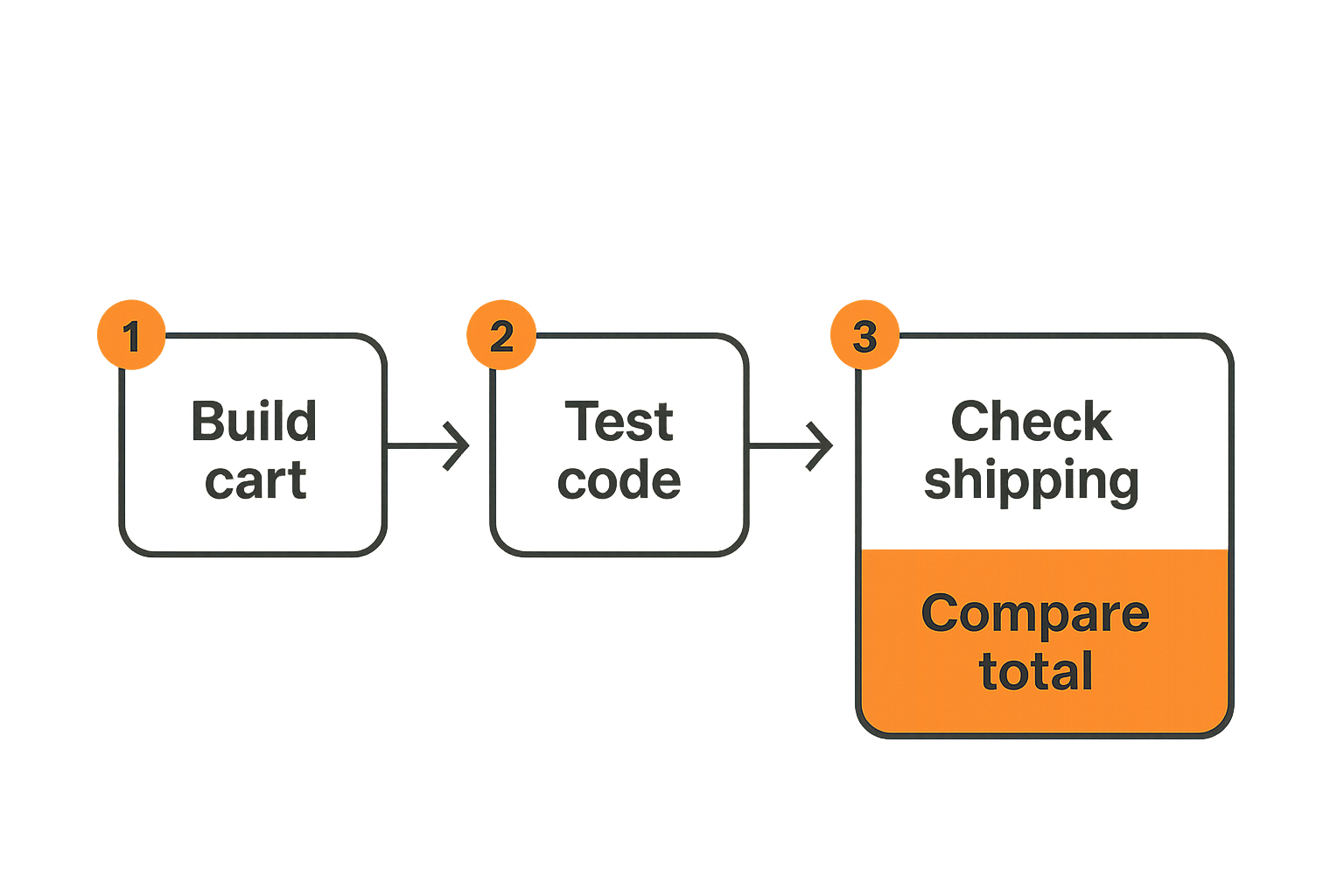
Use this sequence:
- Build the cart with the exact products.
- Choose delivery method and ZIP code.
- Record the total before any manual code.
- Apply one Shutterfly promo code.
- Record the new total and any warning message.
- Remove the code before testing the next one.
- Pick the code with the lowest final total.
This sounds basic, but it prevents most bad coupon decisions.
Test one variable at a time
Do not test a new code while also changing quantity, shipping speed, paper type, or account status. You will not know what caused the price change.
Testing one variable at a time is especially important for cards and photo books. Quantity breaks, page counts, paper upgrades, and envelope options can all affect eligibility.
Practical rule: if the cart changed, restart the comparison. Otherwise you are comparing different orders.
Capture the final total
The final total is the number that matters. Not the discount badge. Not the coupon success message. Not the product subtotal.
Capture these numbers:
- Product subtotal
- Discount amount
- Shipping cost
- Taxes and fees
- Final total
- Delivery estimate
A code that saves more money but pushes delivery too late may not be the best code. A code that saves less but keeps the gift on schedule may be the better operational choice.
What usually stacks and what usually does not
Stackable layers to check
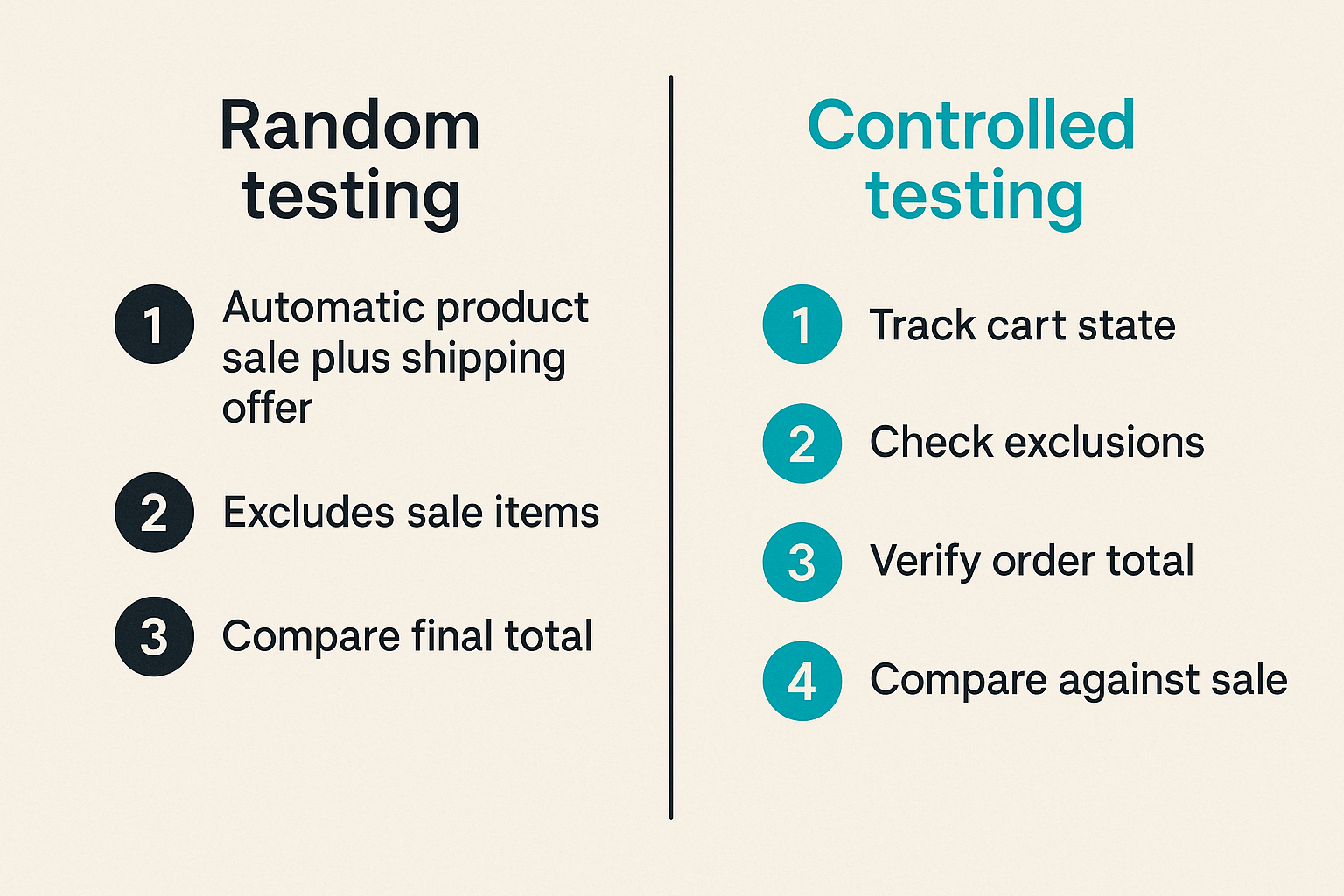
Stacking is where shoppers hope for the biggest win, but it is also where most confusion happens. Shutterfly may allow some combinations and block others depending on the offer.
Layers worth checking include:
- Automatic product sale plus a shipping offer
- Account credit plus public promo code
- Gift card plus product discount
- Quantity discount plus delivery offer
- Category sale plus logged-in account reward
Do not assume stacking works. Test it.
Exclusion patterns that remove savings
Exclusions are not always obvious until checkout. Watch for language around product categories, sale items, premium options, marketplace items, or minimum spend.
Common exclusion patterns:
- Code excludes sale-priced items.
- Code applies only to specific product categories.
- Code requires a minimum product subtotal before shipping.
- Code cannot be combined with other promotions.
- Code applies only to new customers.
- Code excludes taxes, fees, or rush shipping.
What breaks in practice is assuming sitewide means every item. Sitewide often means many items, not all configurations.
Comparison table for common discount types
| Discount type | Best use case | Common failure mode | How to test it |
|---|---|---|---|
| Percentage off | Larger product orders | Excludes sale items or upgrades | Compare final total against auto sale |
| Dollar off | Medium carts near threshold | Minimum spend requirement | Adjust quantity only if you need the item |
| Free shipping | Small or heavy-shipping orders | Excludes rush delivery | Compare with standard shipping selected |
| Category code | Photo books, cards, gifts | Wrong product category | Test on the exact product type |
| Account credit | Returning shoppers | Confused with coupon savings | Record pre-credit and post-credit totals |
| App-only offer | Mobile shoppers | Desktop price differs | Test app and desktop separately |
A useful way to think about it is that every discount type has a job. The best code is the one doing the job your cart actually needs.
A practical workflow for photo books cards and gifts
Photo books
Photo books are usually where shoppers see large headline discounts. They are also where upgrades can change the economics.
Before applying Shutterfly promo codes, finalize the book enough to know the real structure:
- Size
- Cover type
- Page count
- Paper quality
- Layflat or premium options
- Quantity
Then test the code. If you add pages after testing, retest. If you upgrade the cover after testing, retest.
For photo books, percentage discounts are often powerful, but only if they apply to the full configuration. A smaller discount that includes upgrades can beat a larger discount that applies only to the base book.
Cards and announcements
Cards behave differently because quantity and timing matter. Graduation announcements, holiday cards, wedding save-the-dates, and birth announcements often have deadlines.
The workflow should be:
- Select card design and quantity.
- Add envelope options.
- Enter shipping ZIP code.
- Test quantity-based offer.
- Test promo code.
- Compare delivery date with the event deadline.
The cheapest order is not useful if it arrives after the date you need to mail the cards.
Personalized gifts and prints
Gifts and prints can look inexpensive until shipping enters the cart. This is where free shipping or order-threshold codes can perform well.
For personalized gifts, also check whether the item is part of the same promotion as prints or photo books. A broad Shutterfly promo code may not include every mug, blanket, puzzle, ornament, or wall art product.
Related reading from our network: streaming systems face a similar last-mile problem where the visible interface is not the whole experience; this adjacent piece on cloud computing IPTV architecture is a useful reminder that delivery and reliability change the outcome.
Shipping taxes and timing are part of the deal
Shipping can erase the headline discount
Shipping is where many Shutterfly orders lose value. A shopper sees a strong product discount, then discovers that delivery cost brings the order close to the original total.
This is not a reason to ignore product discounts. It is a reason to compare complete orders.
For small orders, test free shipping early. For larger orders, test the strongest product discount first, then see whether any shipping offer can stack. If only one code is allowed, choose based on final total.
Taxes and fees change the real savings
Taxes and fees are not usually controlled by promo codes, but they still affect what you pay. If two codes are close, taxes can make the difference smaller than it first appears.
Record the final charged total. That is the number your budget cares about.
A code that says it saved 20 dollars may only reduce your final payment by less than expected once shipping and taxes are recalculated. The reverse can happen too when a shipping code removes a taxable shipping charge in some locations.
Deadlines create expensive decisions
Photo products often have emotional deadlines: birthdays, anniversaries, graduations, holidays, memorials, baby announcements. That pressure makes shoppers accept weak checkout results.
Build earlier when possible. The earlier you finish the design, the more time you have to wait for a better code or select standard shipping.
Practical rule: the cheapest Shutterfly order is usually planned before the deadline forces rush shipping.
Common failure modes with Shutterfly promo codes
Expired codes that still rank
Old coupon pages can rank long after the code expires. This creates a frustrating loop: copy code, paste code, error message, repeat.
Do not spend unlimited time on old codes. If a code has no recent validation and fails once on a controlled cart, move on. Your time has value too.
A practical cutoff is three to five serious code tests after you have checked account offers and current sale banners. After that, you are often better off improving the cart, waiting for a sale window, or using the best available automatic offer.
Minimum spend traps
Minimum spend offers can be useful, but they can also push shoppers into buying items they do not need.
Example: if a code requires a higher subtotal, adding extra prints or gifts might unlock the discount. But if those extras cost more than the savings, the code failed its job.
Use this rule:
Extra items added to unlock code
minus additional discount received
equals real cost of chasing the threshold
If the real cost is positive and you do not need the items, skip the threshold.
Mobile app and desktop mismatch
Some shoppers see different offers in the Shutterfly app, mobile browser, and desktop browser. That can be legitimate. It can also be confusing.
If you are making a larger order, test both environments if practical. Keep the same cart structure and compare final totals. Do not assume the app is always cheaper or the desktop is always more stable.
What works is documenting the result. What fails is switching devices, changing the cart, and assuming the price difference came from the promo code alone.
What works when you shop often
Keep a lightweight deal log
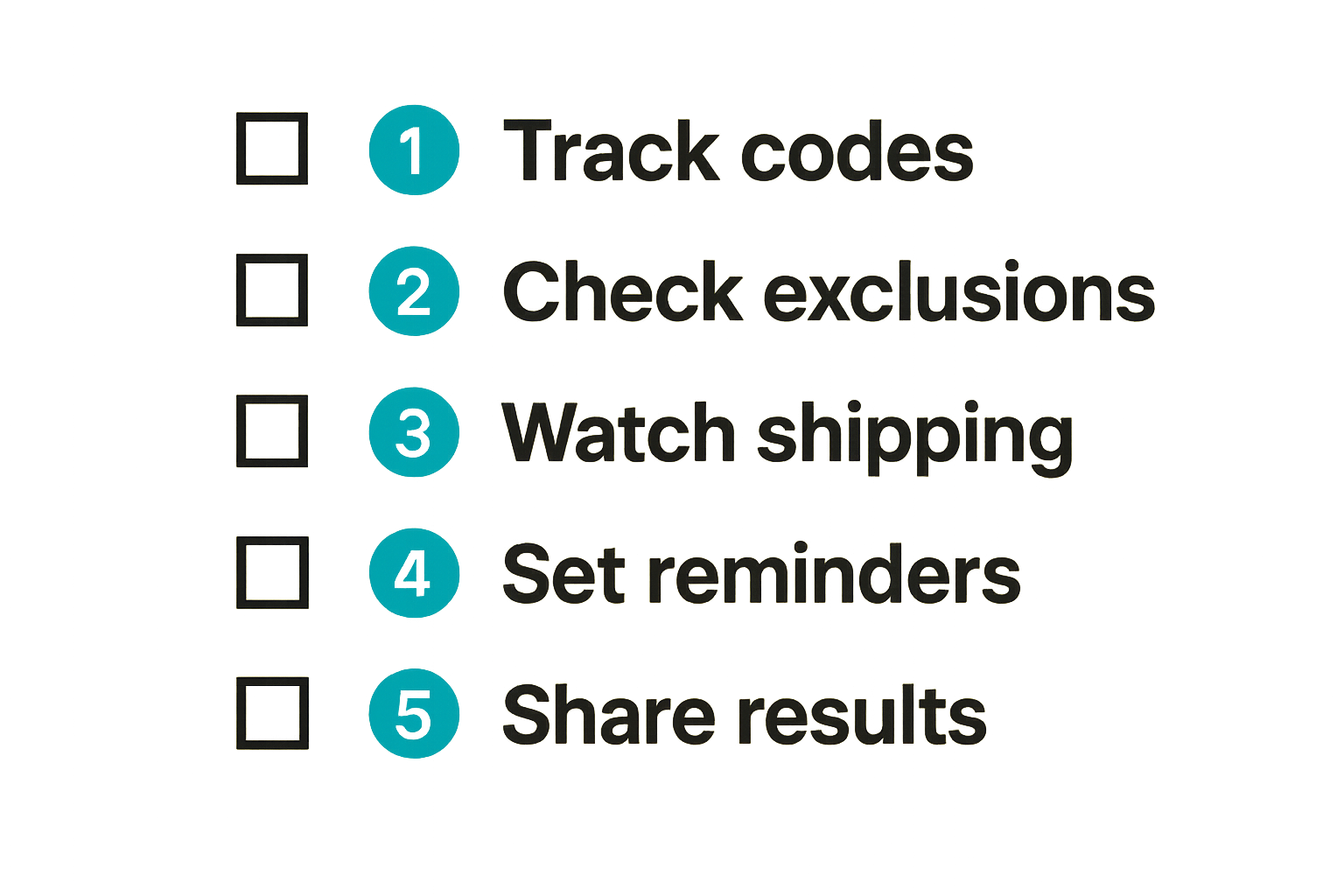
If you use Shutterfly several times a year, keep a simple deal log. It does not need to be complicated.
Track:
- Date
- Product type
- Code tested
- Code result
- Shipping cost
- Final total
- Any exclusions
- Delivery experience
After a few orders, patterns become obvious. You may learn that free shipping is consistently better for small print orders, while product percentage discounts win for large photo books.
Use reminders for predictable events
Most Shutterfly purchases are predictable. Holiday cards, calendars, graduation announcements, Mother’s Day gifts, Father’s Day gifts, and birthday photo books come around on a schedule.
Set reminders before the deadline, not on the deadline. Give yourself time to build the product, test codes, and avoid rush delivery.
A practical reminder schedule:
- Four weeks out: choose product and gather photos.
- Three weeks out: build the design.
- Two weeks out: test current Shutterfly promo codes.
- Ten days out: order if the price and delivery date are acceptable.
- Final week: avoid last-minute upgrades unless necessary.
That changes the conversation from panic buying to controlled buying.
Share verified results with the community
Coupon communities work best when shoppers share useful details, not just code strings. If you find a working Shutterfly code, include what it worked on.
Helpful notes include:
- Product category
- Minimum spend
- Whether it stacked
- Whether it worked on sale items
- Date tested
- Any error message
You can help other shoppers by adding working deals through the community submission flow at submit a coupon code. Better coupon data reduces wasted checkout attempts for everyone.
Product fit: using c0upons.com for Shutterfly promo codes
Why community verification matters
Shutterfly promo codes are time-sensitive and context-sensitive. That makes them a poor fit for static coupon lists that are rarely updated.
Community verification helps because shoppers can report what happened in real carts. A code might be dead. It might work only for cards. It might require a logged-in account. It might fail on sale items. Those details are more useful than a bold discount claim with no context.
The practical question is not whether a coupon site has hundreds of codes. It is whether the available codes are recent, testable, and described clearly enough to use.
How to contribute better coupon data
If you share Shutterfly promo codes, make the note operational.
Good submission:
Code worked on 50 holiday cards, standard envelopes, desktop checkout, tested June 2026. Did not stack with free shipping.
Weak submission:
Great Shutterfly code, try it.
The first note helps another shopper make a faster decision. The second creates more guessing.
At c0upons.com, the goal is practical savings: coupon codes, promo codes, sales, and deal roundups that shoppers can actually test. For Shutterfly, that means treating every code as part of a checkout workflow, not a magic word.
Closing: make Shutterfly promo codes a checkout system
The practical takeaway
Shutterfly promo codes can absolutely help, but the best savings usually come from process, not luck.
Build the cart first. Record the baseline. Test one code at a time. Separate product discounts from shipping discounts. Watch exclusions. Compare the final total. Save what worked so the next order is faster.
That is the difference between coupon hunting and checkout control. In 2026, the shoppers who save more are usually not the ones pasting the most codes. They are the ones testing Shutterfly promo codes against the real order total.
Try c0upons.com
c0upons.com helps online shoppers find practical ways to save money with coupon codes, promo codes, sales, and deal roundups. Try c0upons.com