Shutterfly Promo Codes in 2026: A Practical Workflow for Saving More at Checkout
You can spend 40 minutes building a photo book, calendar, blanket, mug, or graduation announcement, paste a Shutterfly promo code at checkout, and watch the discount do almost nothing.
That is the frustrating part. Shutterfly promo codes often look generous from the outside. In practice, the final savings depend on product category, personalization choices, shipping speed, sale timing, account offers, and whether the code actually applies to the cart you built.
Teams think the problem is finding a coupon code. The real problem is managing the checkout workflow so the right offer is tested against the right basket at the right time.
That changes the conversation. Instead of hunting random codes until one turns green, the practical question is: how do you build a repeatable buying process that protects the biggest savings before you commit to a custom order?
Table of contents
- Why Shutterfly promo codes are a checkout workflow
- Know your order economics before hunting codes
- Where to find Shutterfly promo codes that are worth testing
- Build a coupon-testing workflow before checkout
- Understand stacking rules and exclusions
- Shipping is where Shutterfly savings often leak
- What works for Shutterfly promo codes in 2026
- What fails when shoppers use promo codes badly
- Use the coupon community without adding noise
- Use c0upons.com as part of the savings workflow
Why Shutterfly promo codes are a checkout workflow
The discount is only one layer
Shutterfly sells personalized products. That makes the savings problem different from buying a standard item with a fixed SKU. A photo book is not just a photo book once you choose the size, cover type, page count, paper finish, layout options, and shipping window.
The mistake teams make is treating the coupon field as the whole system. For shoppers, the same mistake looks like this: you search Shutterfly promo codes, grab the biggest percentage, and assume the best code wins.
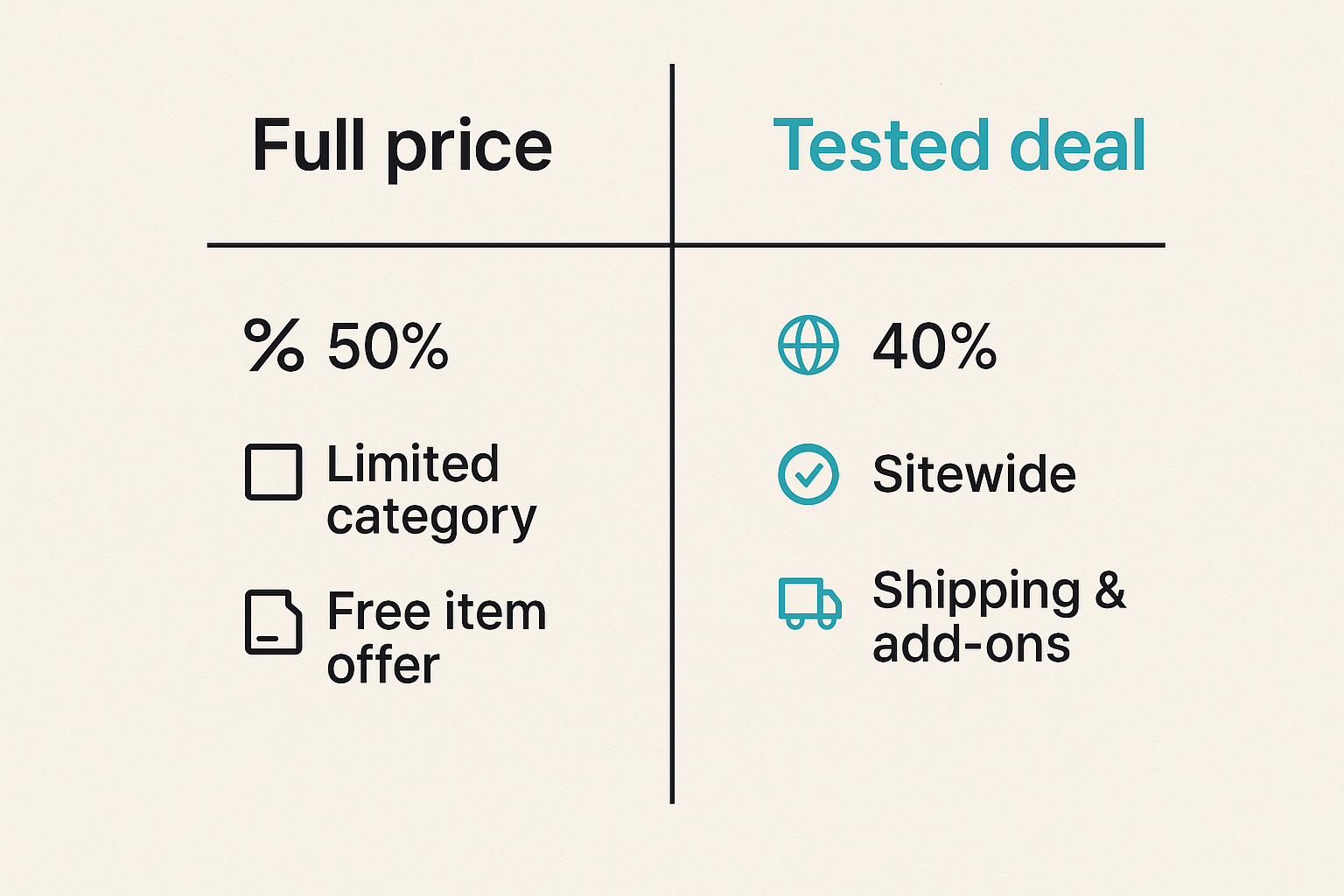
It rarely works that cleanly. A 50% code on a limited category can lose to a lower percentage sitewide code if your cart contains upgrades. A free item offer can still leave you paying more than expected once shipping and add-ons are included.
Practical rule: Never judge a Shutterfly deal by the promo headline. Judge it by the final payable total after tax, shipping, upgrades, and exclusions.
Why timing matters more than code volume
Many shoppers open ten coupon tabs and treat the process like code roulette. More codes do not automatically mean better savings. A code that worked yesterday may expire. A sale price can change. A cart-level offer may appear only after you log in. A holiday shipping deadline can push you into a more expensive delivery method.
The practical question is not how many codes you can collect. It is whether you test a small set of credible offers while your cart, shipping choice, and purchase deadline are stable.
Related reading from our network: teams dealing with technical infrastructure face a similar workflow problem in cloud computing services architecture, where the visible interface is less important than the moving parts behind it.
The basket decides the outcome
Shutterfly promo codes are only useful in relation to a specific basket. A photo book order behaves differently from wedding invitations, prints, calendars, wall art, cards, or personalized gifts. Even inside one category, options can change eligibility.
A useful way to think about it is this: the cart is the test environment. If you keep changing the cart while testing coupons, you are not comparing discounts. You are comparing different purchases.
Know your order economics before hunting codes
Separate product price from shipping
Most shoppers focus on the product discount because it is visible. Shipping is less exciting, but it often determines whether the deal is actually good.
If your cart drops from $80 to $40 with a promo code but shipping rises to $18 because you waited until the last minute, the real savings are smaller than the banner suggests. If another offer gives a smaller product discount but cheaper shipping or a better threshold, it may win.
Use a simple comparison table before you buy:
| Cart scenario | Product discount | Shipping impact | Best for |
|---|---|---|---|
| High percentage code | Usually strong | May not help shipping | Large eligible product orders |
| Free item code | Strong on one item | Shipping still applies | Small gifts, cards, samples |
| Sitewide sale plus code | Often strongest | Depends on stacking | Mixed carts and planned orders |
| Free shipping threshold | Product discount may be lower | Can reduce total fast | Bulk prints, cards, multiple gifts |
Watch upgrades and personalization fees
Personalization is the point of Shutterfly, but it is also where totals creep up. Premium paper, extra pages, foil, envelopes, gift packaging, design services, and larger sizes can change the order economics.
Some promo codes may apply before upgrades. Some may exclude certain premium options. Some may discount only the base product. This is why shoppers get surprised at checkout: the code is valid, but the expected savings do not map to the upgraded version in the cart.
Practical rule: If an upgrade matters to you, add it before testing codes. If it is optional, test the cart with and without it so you know the real cost of that choice.
Build a baseline cart first
Before opening coupon sites, build the version of the order you would actually buy. Save the project if possible. Choose the likely shipping method. Log in so account-specific offers are visible.
Then write down the baseline total. This number is your reference point. Without it, every discount feels good because you have nothing stable to compare against.
A basic deal log can be as simple as:
Project: 8x8 photo book
Baseline total: $64.18
Shipping method: Standard
Code tested: SAVE40
Final total: $43.92
Notes: worked on book, not extra pages
Where to find Shutterfly promo codes that are worth testing
Start with active onsite offers
Start where the purchase happens. Shutterfly often promotes current offers on its own site, in banners, account dashboards, product pages, or checkout messages. These offers are not always the best, but they establish the current sale environment.
If the site is already discounting a product category, you need to know whether your promo code stacks with that sale or replaces it. What breaks in practice is assuming an external code adds to every visible discount. Sometimes it does. Sometimes it replaces a better automatic offer.
For broader deal habits beyond one store, the c0upons community publishes practical savings guides on the c0upons blog, including ways to evaluate discounts without relying on hype.
Use community coupon signals
Coupon communities are useful when they capture recency and context. A code that says worked today is more useful than a generic code copied across ten websites. A report that says worked on 5x7 cards with standard shipping is even better.
The quality signal is not just whether a code exists. It is whether other shoppers are reporting the same checkout behavior you care about.
Related reading from our network: source quality matters in search visibility too, and this guide to answer engine optimization for cloud computing pages is a useful adjacent example of why structured, verifiable information beats vague claims.
Treat email and app offers as private inventory
Email and app offers can be stronger than public coupon codes, especially for returning customers. They may also be account-specific, single-use, or tied to a short window.
Do not paste private codes into public threads without understanding the risk. If it is a single-use code, sharing it may burn the offer. If it is account-bound, it may not help anyone else.
A practical workflow is to collect public codes first, then compare them against your account offers. If an email offer wins, use it. If a public code wins, save the private code for another order if the terms allow it.
Build a coupon-testing workflow before checkout
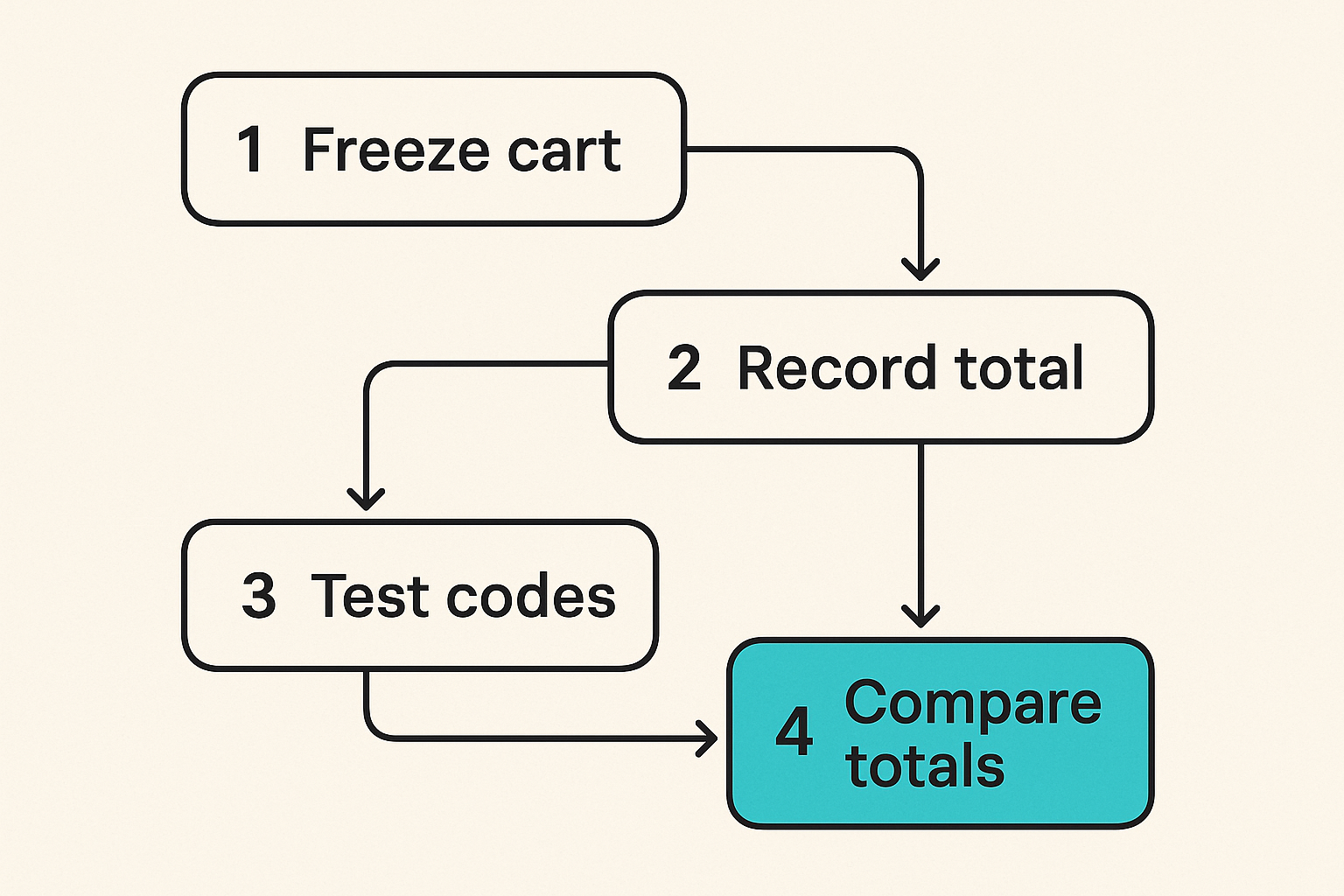
Step 1: freeze the cart
The simplest way to make coupon testing useful is to stop changing the order while you test. Freeze the cart with the products, quantities, personalization choices, and shipping method you expect to buy.
Then test offers against that same cart. If you add another mug, change from standard to expedited shipping, or upgrade paper while testing, your comparison becomes noisy.
Step 2: test codes in a clean order
Use a short, controlled sequence:
- Log in to your Shutterfly account.
- Build and save the intended project.
- Add the project to cart and choose a shipping method.
- Record the baseline total.
- Test the best onsite offer first.
- Test verified public Shutterfly promo codes one at a time.
- Test any email or app offer last.
- Keep the lowest final total that still matches your delivery deadline.
This is not complicated. The discipline is in not mixing variables.
Practical rule: Test one promo code at a time and record the final total. If you cannot explain why the total changed, do not trust the comparison.
Step 3: compare final totals, not discount banners
Coupon banners are designed to be simple. Checkout totals are where the truth shows up. Always compare the amount you will actually pay.
For example, Code A may show 45% off but exclude part of your cart. Code B may show 30% off but apply to more items. Code C may unlock free shipping over a threshold. The winner is not the biggest number. The winner is the lowest total for the order you actually want.
This is also where support issues start. If you misunderstand the deal and order a custom product, you may not have the same flexibility as a normal retail return. Slow down before final confirmation.
Understand stacking rules and exclusions
One code may replace another
Stacking is the part shoppers want most, and the part that causes the most confusion. Some offers stack with sale pricing. Some do not. Some codes replace automatic discounts. Some apply only to eligible items in a mixed cart.
The mistake teams make is assuming stacking is a moral rule. It is not. It is a checkout rule. The system either allows the combination or it does not.
If the cart removes one discount when you apply another, do not keep forcing it. Compare both final totals and move on.
Free product offers are not always free orders
Free prints, free photo books, free cards, or free gifts can be useful, but free product does not mean free checkout. You may still pay shipping, taxes, upgrades, extra pages, or premium options.
These offers work best when you want the specific item being promoted and can avoid unnecessary add-ons. They work poorly when you use the word free as permission to build a larger cart than planned.
Category exclusions matter
Shutterfly has many product categories. A promo code may apply to cards but not gifts, prints but not wall art, books but not premium upgrades, or sitewide items except partner products.
Read the terms before you invest too much design time. If you are creating a complex project, confirm eligibility with a small test cart early. The worst time to discover an exclusion is after you have spent an hour perfecting layouts.
Shipping is where Shutterfly savings often leak
Rush shipping can erase a good promo
Personalized products need production time. That means your real deadline is not the event date. It is the latest safe order date for the shipping method you can afford.
Rush shipping can be worth it for important gifts or announcements, but it should be a conscious tradeoff. If you routinely wait until the last minute, you are letting shipping absorb the savings that promo codes created.
Related reading from our network: reliable delivery systems have the same hidden constraint, and this piece on cloud computing IPTV architecture is a useful adjacent example of why delivery, caching, and timing matter after the visible product is built.
Bulk orders change the math
Bulk cards, announcements, invitations, and prints can unlock different savings patterns. A percentage discount may scale better on a large order. A shipping threshold may matter more. A small free item offer may become irrelevant.
If you are ordering for a wedding, graduation, business event, family reunion, memorial, or holiday card list, build the full quantity before testing codes. Do not test on a sample quantity and assume the same code wins at scale.
Delivery timing should be part of the plan
Put the delivery date into the workflow, not at the end. If you need cards in hand by a certain day, work backward:
- Event date
- Latest safe arrival date
- Shipping window
- Production time
- Design review time
- Coupon testing time
This sounds excessive until you miss a deadline. Then the expensive shipping option becomes the only option.
What works for Shutterfly promo codes in 2026
Use seasonal windows without waiting too long
The strongest Shutterfly promo codes often cluster around predictable shopping periods: holidays, graduation season, wedding planning windows, back-to-school, Mother’s Day, Father’s Day, Black Friday, Cyber Monday, and year-end gifting.
The trap is waiting for a slightly better code until production and shipping pressure increase. A useful way to think about it is expected savings versus deadline risk. If a code saves you $8 but waiting forces $18 rush shipping, the better-looking discount failed.
Combine sale pricing with verified codes
The best outcomes often come from combining an active sale with a verified code that still applies to your cart. The word verified matters. Expired, recycled, or context-free codes waste time.
Use a short list of likely codes, not a giant pile. Test the onsite offer, then the most recently reported public codes, then your private account offers. That order keeps the workflow clean.
Save project drafts before the deal hunt
Design work and deal hunting use different parts of your attention. Do not do both at the same time if the order matters.
Finish the project first. Save it. Step away if needed. Then test discounts. This prevents a common failure mode: accepting a worse total because you are tired and just want the checkout process to end.
Practical rule: Separate creative decisions from price decisions. Design the product first, then negotiate the checkout total.
What fails when shoppers use promo codes badly
Chasing the highest percentage
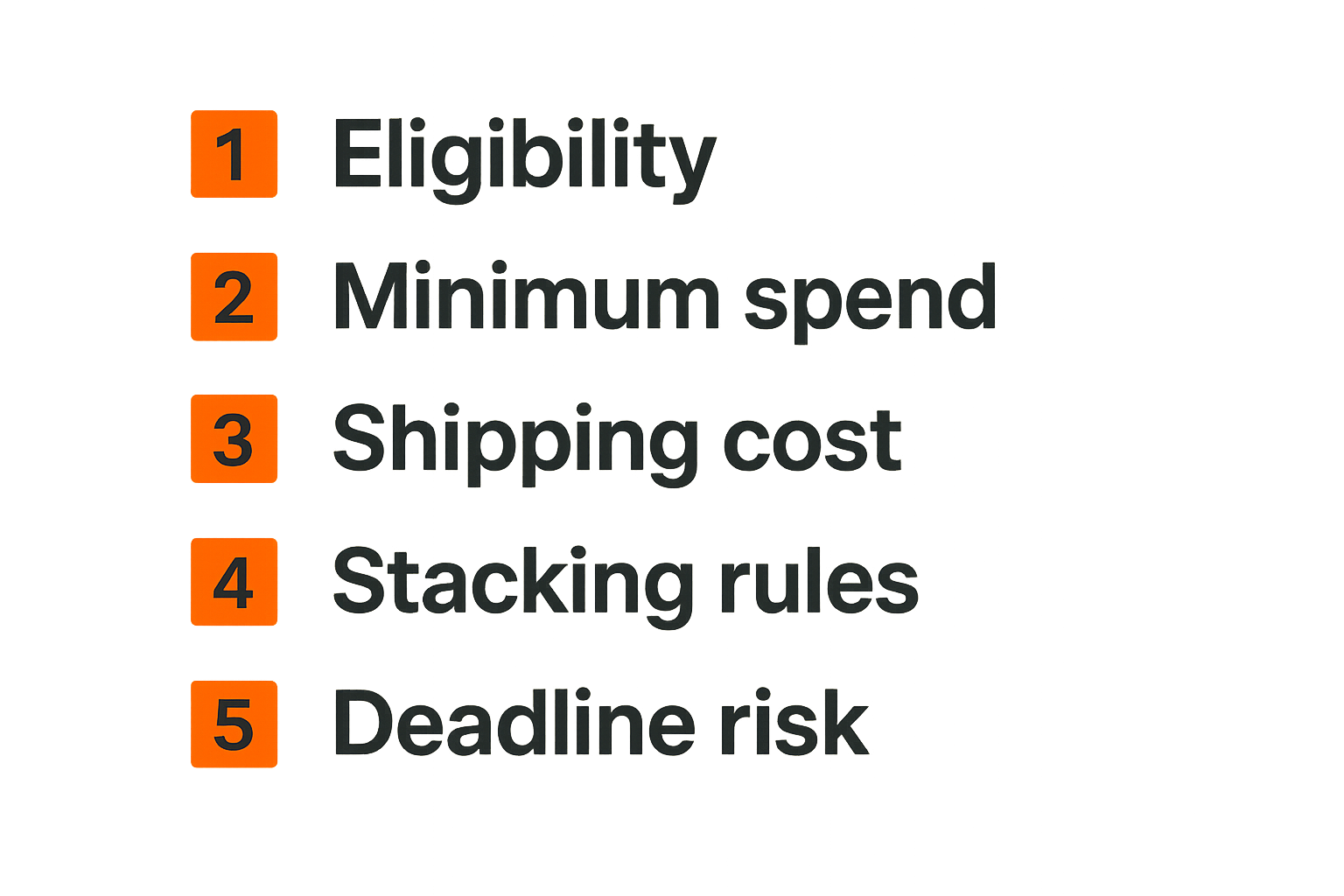
A 60% code looks better than a 35% code until it excludes the item you are buying or applies only to a narrow product group. High percentages are useful only when eligibility matches your cart.
What breaks in practice is shoppers sorting codes by headline instead of by final total. This creates false confidence and wasted checkout attempts.
Ignoring minimums and product eligibility
Many offers depend on minimum spend, product category, quantity, or account status. If your order is $48 and the code requires $50, adding a small item might help. Or it might raise the total more than the discount is worth.
Eligibility should be tested, not guessed. If a code fails, check whether the cart is below the threshold, contains excluded products, uses an incompatible sale, or has already applied a better automatic discount.
Testing codes after you are emotionally committed
This is the most expensive failure mode. You build the perfect custom gift, imagine the recipient opening it, then reach checkout and discover the savings are weaker than expected. At that point, many shoppers buy anyway.
There is nothing wrong with buying the product if it is worth it. The problem is pretending the promo code drove the decision when the real driver was commitment.
A better workflow is to do a rough eligibility test early. Add a similar product, test likely codes, and confirm the discount pattern before investing detailed design time.
Use the coupon community without adding noise
Report the cart context
Community coupon data gets better when shoppers report context. If you say a code worked, include the category, rough order type, and date. You do not need to share personal details.
Useful reports look like:
- Worked today on 8x8 photo book, standard cover, standard shipping
- Did not work on wall art, may be cards only
- Worked on prints but shipping still applied
- Replaced automatic sale, final total was higher
This helps other shoppers avoid repeating the same failed tests.
Share failures as well as wins
Failed codes are not useless. A fresh failure report can save someone else time, especially when it includes the reason. Expired, category excluded, minimum not met, account-specific, and replaced better sale are all different failure modes.
If you find a working code or discover a bad one, you can help other shoppers by sharing it through the community coupon submission flow at c0upons.com submit.
Keep a small deal log
You do not need a spreadsheet for every purchase, but repeat Shutterfly shoppers benefit from a small record. If you buy photo books every year or order holiday cards annually, your past totals are useful context.
Track:
- Product type
- Order date
- Promo code used
- Baseline total
- Final total
- Shipping method
- Notes on exclusions
The point is not perfection. The point is pattern recognition. After two or three orders, you will know which deal types actually save you money.
Use c0upons.com as part of the savings workflow
Where c0upons.com fits
c0upons.com is useful as a coupon signal layer, not as a replacement for checkout discipline. Use it to find current codes, compare community reports, and avoid wasting time on obviously stale offers.
The site is built for online shoppers who want practical ways to save money with coupon codes, promo codes, sales, and deal roundups. That fits the Shutterfly workflow because the hard part is not finding one code. It is finding a credible code and testing it against your real cart.
How to use it without over-shopping
Set a limit before you start. For example: test the top three credible Shutterfly promo codes, compare them with the onsite offer, and buy only if the final total meets your budget.
This prevents the coupon hunt from turning into a shopping spiral. Saving money is not just about lowering the price of one order. It is also about not adding products you did not plan to buy just to satisfy a promo threshold.
The clean workflow is simple: build the cart, record the baseline, test credible offers, compare final totals, and share useful results. That is how Shutterfly promo codes become a reliable savings process instead of a guessing game.
Try c0upons.com
c0upons.com helps online shoppers find practical coupon codes, promo codes, sales, and deal roundups without the hype. Try c0upons.com.