Monopoly GO Reward Codes in 2026: A Practical Workflow for Finding Real Rewards Without Wasted Clicks
Monopoly GO reward codes look simple until you actually try to use them. You search, open five tabs, dodge pop-ups, tap a few links, and still do not know whether the reward is real, expired, region-limited, already claimed, or bait for a sketchy download.
Teams think the problem is finding more Monopoly GO reward codes. The real problem is building a repeatable workflow for separating legitimate rewards from noise before you waste time or expose your account.
That changes the conversation. This is not just a list of codes. It is a small operating system for deal hunters: source quality, verification, timing, account fit, and community feedback.
The practical question is not, where is the magic code today? The practical question is, how do you check rewards fast enough that you catch real value and skip the traps?
Table of contents
- Monopoly GO reward codes are a workflow, not a treasure hunt
- Build a reliable reward source stack
- Verify Monopoly GO reward codes before you click
- Track expiration, account fit, and claim state
- What works for Monopoly GO reward codes in 2026
- What fails when deal hunters chase bad code lists
- Turn rewards into a budget-conscious game strategy
- Use a community workflow without creating more noise
- A practical implementation checklist
- Where c0upons.com fits into the savings workflow
Monopoly GO reward codes are a workflow, not a treasure hunt
The mistake teams make is treating Monopoly GO reward codes like a secret phrase hidden somewhere on the internet. That mindset creates bad behavior: clicking everything, trusting screenshots, joining spam groups, and assuming the newest post is the most accurate one.
A useful way to think about it is closer to coupon verification. A code or reward link has a lifecycle. It appears somewhere, spreads through communities, gets claimed by some players, expires for others, and then continues circulating long after it stops working.
If you want the latest context, our earlier guide on Monopoly GO reward codes covers the baseline discovery workflow. This guide goes deeper into the operating rules: how to decide what deserves your click, what to track, and when to move on.
Why the search feels broken
Search results reward volume. Reward hunting rewards accuracy. Those two incentives do not always line up.
Many pages update their headline faster than they update the actual reward information. Some recycle expired links because old pages still get traffic. Others use vague wording like new reward, free dice, or limited bonus without saying whether the reward was tested today, yesterday, or last month.
What breaks in practice is confidence. You cannot tell whether the failure is because the reward is expired, you already claimed it, your account is not eligible, the link is fake, or the page was never checked in the first place.
Practical rule: Do not judge a reward source by how many codes it lists. Judge it by how clearly it explains status, date, eligibility, and failure cases.
The real unit of value is a verified reward
A raw code is not value. A link is not value. A screenshot is not value.
The real unit of value is a verified reward that matches your account, is still active, and can be claimed without installing anything suspicious or sharing credentials.
That means your process needs more than a search bar. It needs a verification loop. Before you tap, you should know where the reward came from, when it was last confirmed, what players are reporting, and what the expected claim path looks like.
Related reading from our network: Fubo Streaming in 2026 is a different category, but the same operator lesson applies: the visible offer is only part of the system; device fit, billing, access, and workflow decide whether it works in real life.
Build a reliable reward source stack
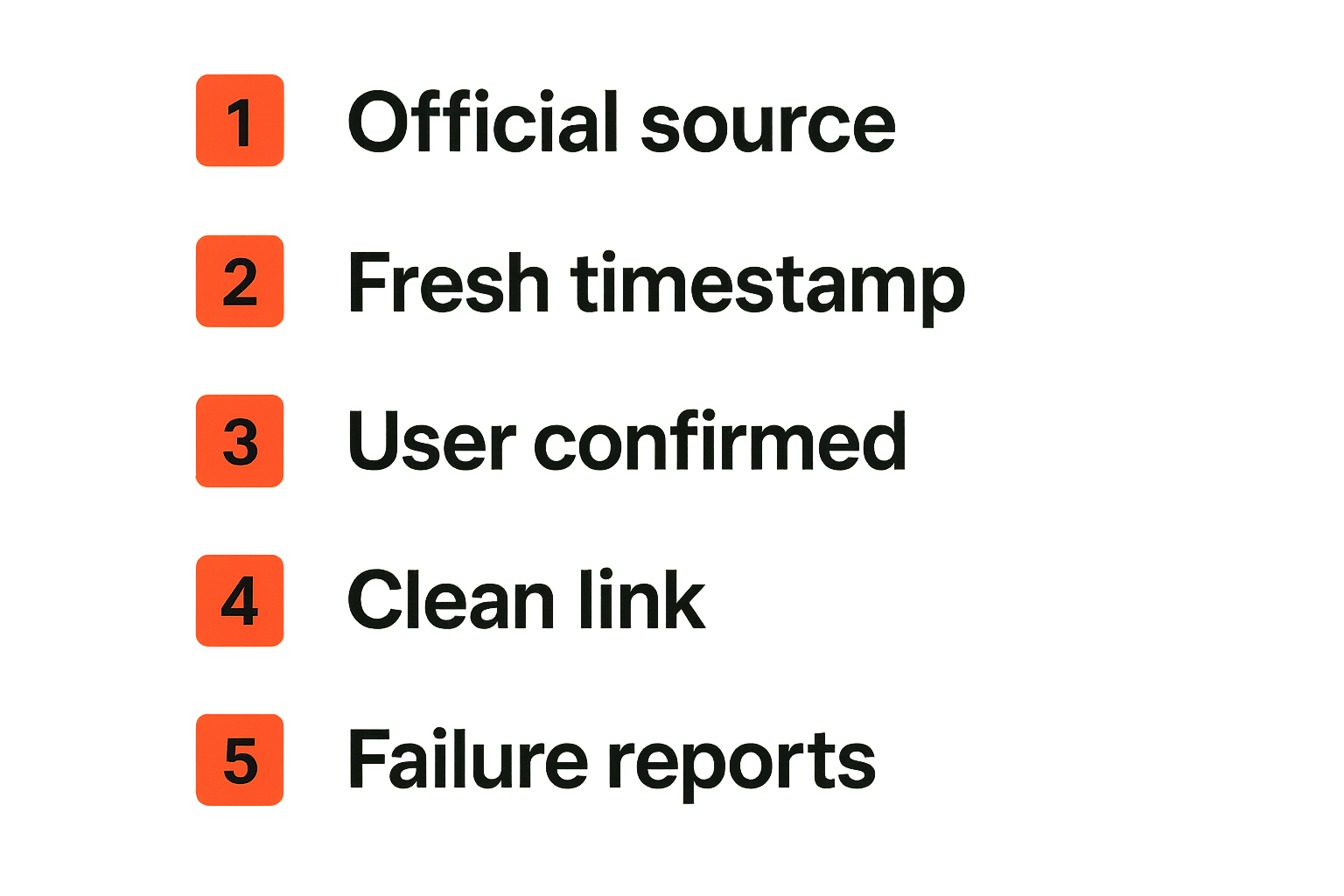
You do not need fifty sources. You need a small stack that you can check quickly and trust selectively.
The practical question is, which sources deserve attention first when a new Monopoly GO reward starts circulating? The answer is not always the loudest social post. It is the source with the best combination of origin, timestamp, confirmation, and clean user path.
Start with source categories, not random links
Group sources before you evaluate individual claims. This makes the workflow faster and reduces emotional clicking.
| Source type | What it is good for | What to watch for | Trust level |
|---|---|---|---|
| Official game channels | First-party announcements and event rewards | Delayed reposts, region details | High |
| Established deal communities | Fast confirmation from many users | Repeated expired links | Medium to high |
| Social posts | Early discovery and alerts | Screenshots without proof | Mixed |
| Random code-list pages | Bulk browsing | Stale pages and ad traps | Low to mixed |
| Direct messages | Almost nothing | Phishing, malware, account theft | Very low |
The source stack does not need to be complicated. Put first-party and high-signal community sources at the top. Put random aggregators below them. Put private messages and forced-download claims outside the workflow entirely.
Practical rule: A source that asks for your login, survey completion, app install, or payment before showing a Monopoly GO reward should be treated as hostile until proven otherwise.
Use a simple trust score
You can score a reward source in under thirty seconds:
- 2 points if the source shows a clear date or timestamp.
- 2 points if multiple users confirm success recently.
- 2 points if the claim path does not require login outside the game or official app flow.
- 1 point if the source explains expiration or eligibility.
- 1 point if failed claims are allowed in the comments instead of deleted.
Anything below 4 points is not automatically fake, but it should not get priority. Anything 6 or above is worth checking if the reward fits your account.
This is the same discipline budget-conscious shoppers use with store deals. A huge promo code is not useful if it only works for new customers, excludes sale items, or dies at checkout. Mobile game rewards have similar hidden conditions.
Verify Monopoly GO reward codes before you click
The mistake teams make is testing rewards directly from the page where they found them. That is convenient, but it removes a layer of inspection.
You do not need to be paranoid. You do need a basic verification routine that catches the obvious traps.
Check the destination first
Before clicking a reward link, slow down for five seconds and inspect where it goes. On desktop, hover. On mobile, long-press when possible. You are looking for mismatched domains, shortened links with no context, forced redirects, and pages that pretend to be official but are not.
Clean reward flows usually do not need your account password on a random page. They also do not need you to download a separate generator, complete a survey, or verify your age with a credit card.
If the path looks like this, stop:
- Social post promises unlimited dice.
- Link opens a non-game domain.
- Page asks for username and device.
- Page shows a fake progress bar.
- Page requires survey, install, or payment.
That is not a reward workflow. That is a lead capture or scam funnel.
Separate game rewards from coupon-style claims
Monopoly GO reward codes are often discussed like promo codes, but the mechanics are not always the same as retail checkout. Some rewards are links. Some are event bonuses. Some are in-game messages. Some are community rumors that never become claimable rewards.
This distinction matters because coupon habits can mislead you. With a store coupon, you usually paste a code at checkout and see whether the price changes. With a game reward, the failure may be less obvious. You might land in the app with no message, see nothing because you already claimed it, or miss the reward because it expired earlier in the day.
Related reading from our network: End to End Encryption Messaging in 2026 is about private team communication, but the relevant parallel is trust boundaries. If a workflow asks for more access than it needs, that is a signal to slow down.
Track expiration, account fit, and claim state
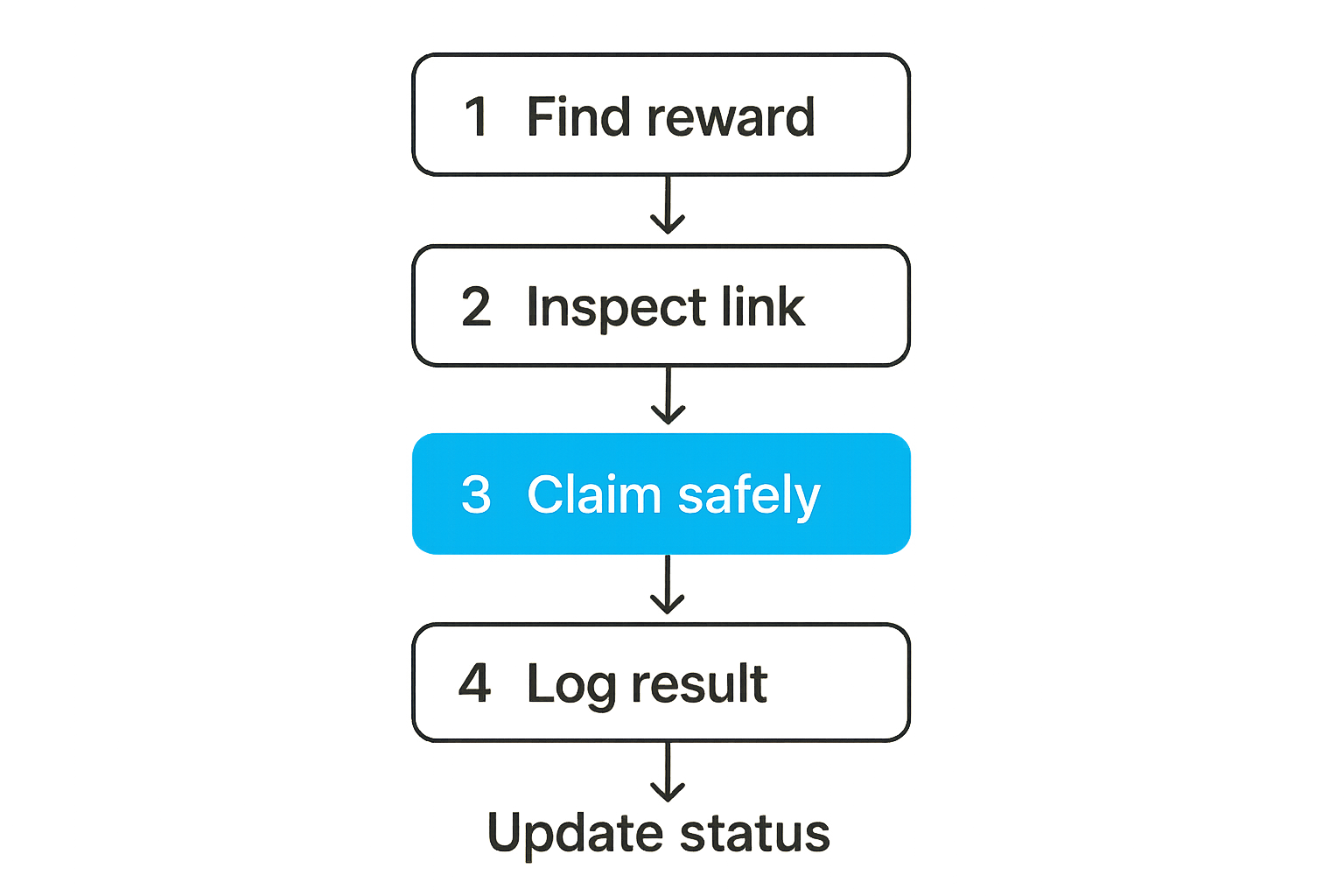
Most failed reward hunts are not caused by a lack of effort. They are caused by missing state.
State is the boring part: active or expired, claimed or unclaimed, eligible or ineligible, regional or global, official or unverified. But state is what turns a messy list into a useful workflow.
Expiration is the silent failure
Reward links can move fast. A list that was useful in the morning may be stale by evening. A post from yesterday may still rank well while the reward behind it is dead.
Do not keep retrying the same reward unless you have a reason to believe the state changed. Retrying expired rewards burns attention. It also makes you more likely to click bad alternatives because you feel behind.
A lightweight tracker can be as simple as a note on your phone:
- Reward source
- Date found
- Time checked
- Status: claimed, failed, expired, unknown
- Notes: already claimed, no app response, suspicious redirect, confirmed by others
Practical rule: If you cannot tell when a reward was last verified, treat it as unverified no matter how many people are sharing it.
Account state matters more than people expect
Two players can tap the same reward and get different results. One may have claimed it already. One may be outside the eligible region. One may be on a different app version. One may be affected by event timing.
This is why comments like works or does not work are incomplete. Better comments include conditions:
- Worked today on iOS.
- Already claimed on my account.
- Opened app but no reward message.
- Expired for me at this time.
- Worked after updating the app.
Those details reduce noise for everyone else. They also help you decide whether a failed claim is worth investigating or simply done.
What works for Monopoly GO reward codes in 2026
There is no perfect system, but some habits consistently beat blind searching.
What works is boring: small checks, clean sources, fast verification, and disciplined stopping points. Deal hunters who save the most time usually do less, not more. They remove low-quality paths before they become distractions.
Small daily checks beat weekend scraping
If you only check once a week, you will see more expired rewards and more recycled posts. A short daily routine works better because rewards are time-sensitive and community confirmation is fresher.
Try this simple rhythm:
- Check one or two trusted sources first.
- Scan for rewards posted or confirmed today.
- Inspect the destination before tapping.
- Claim only if the path looks clean.
- Record the result.
- Stop when no high-quality source has a fresh reward.
The stopping point is important. Without it, reward hunting becomes an open-ended scroll session.
Community confirmation is useful when it is structured
Community feedback is powerful when it captures useful fields. It becomes noise when it is just hype.
Good confirmation looks like this:
- Date and approximate time.
- Device or platform if relevant.
- Result after tapping.
- Whether the account had claimed it before.
- Any error message or redirect behavior.
Bad confirmation looks like this:
- Works 100 percent.
- Huge reward today.
- DM me for link.
- Unlimited dice.
- Verified, but no details.
Related reading from our network: Invoicing Software in 2026 sounds far from game rewards, but the workflow lesson is similar: month-end chaos is usually a state and reconciliation problem, not a screen design problem.
What fails when deal hunters chase bad code lists
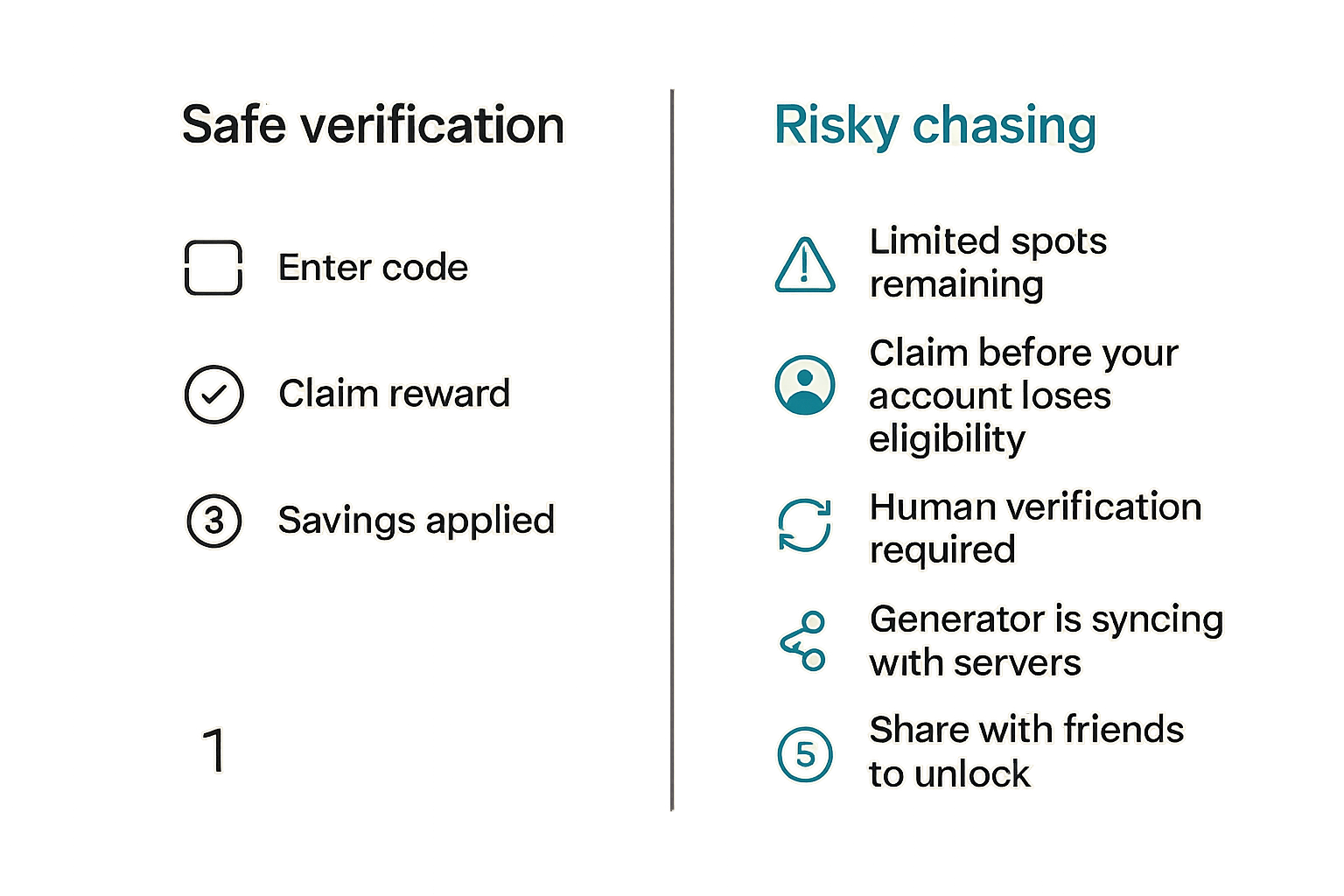
Bad reward workflows do not just waste time. They train you to ignore warning signs.
The biggest failure mode is not one bad click. It is building a habit of clicking through uncertainty because the promised reward feels urgent. That is how fake generators, survey funnels, and credential traps get attention.
Fake urgency creates bad decisions
Scammy reward pages often use the same pressure tactics:
- Limited spots remaining.
- Claim before your account loses eligibility.
- Human verification required.
- Generator is syncing with servers.
- Share with friends to unlock.
These messages are designed to make you act before you inspect. They also borrow language from real promos, which makes them feel familiar to deal hunters.
Practical rule: Real savings do not require panic. If a reward page becomes more aggressive as you hesitate, leave.
Reward chasing can cost more than it saves
The hidden cost is attention. Spending forty minutes to chase a minor reward is not a win if you could have used that time to check better offers, compare real discounts, or simply play without pressure.
There is also a spending risk. A player who misses a reward may be more tempted to buy dice, packs, or event progress to catch up. That is where reward hunting can flip from saving money to encouraging impulse spending.
A useful way to think about it is cost control. Rewards are a bonus. They should support your game plan, not create a reason to spend more when the reward does not appear.
Turn rewards into a budget-conscious game strategy
Monopoly GO reward codes are most useful when they fit a broader spending rule. If you are budget-conscious, the goal is not to claim every possible reward. The goal is to reduce unnecessary purchases and avoid chasing losses.
That changes the conversation from code hunting to resource planning.
Map rewards to actual in-game needs
Before claiming or chasing anything, ask what you need the reward for. Is it to finish a time-sensitive event? Keep a dice reserve? Trade stickers? Avoid an in-app purchase?
If the reward does not change a decision, it may not be worth chasing aggressively. This is especially true when the source is weak or the claim path is messy.
A simple priority model helps:
| Reward use | Worth chasing? | Why |
|---|---|---|
| Avoiding an in-app purchase | High | Direct budget impact |
| Completing a near-finished event | Medium to high | Depends on remaining cost |
| Building a small dice buffer | Medium | Useful, but not urgent |
| Clicking out of curiosity | Low | Easy to waste time |
| Following unlimited reward claims | Avoid | Usually unsafe or misleading |
Avoid spending to rescue a bad session
The worst pattern is spending money because a free reward did not work. That turns disappointment into a purchase trigger.
Set rules before you play:
- No purchase immediately after a failed reward claim.
- No purchase to recover from a risky roll session.
- No purchase because a social post says everyone else is advancing.
- No purchase without checking whether the event reward is actually reachable.
These rules are not about never spending. They are about making spending deliberate instead of reactive.
Use a community workflow without creating more noise
Deal communities work when people contribute clean information. They break when everyone reposts unverified links.
The mistake teams make is assuming sharing fast is always helpful. In practice, a fast unverified post can waste more time across the group than a slower verified one.
Post useful reward reports
If you share a Monopoly GO reward code or link, include enough context for others to evaluate it. A good post is short but complete:
- Source: where you found it.
- Time: when you checked it.
- Result: claimed, failed, expired, already claimed.
- Path: opened app directly, redirected, requested login, or other behavior.
- Warning: anything suspicious.
If you find a real discount, code, or deal outside the game, you can also submit a coupon to the community so other shoppers can test and improve the signal. The same principle applies: a deal gets better when the claim path and result are visible.
Handle corrections quickly
Expired rewards should not keep circulating as if they are active. If you posted something that stops working, update the post. If someone reports a suspicious redirect, do not argue from ego. Recheck it.
A community that corrects itself quickly becomes more useful than a larger community that never cleans up.
The practical rule is simple: reward status is not a personal opinion. It is operational state. When the state changes, the post should change.
A practical implementation checklist
The workflow does not need special tools. A notes app, a spreadsheet, or a small shared thread is enough. The important part is consistency.
If you want the operator version, run reward hunting like checkout testing. You are not proving that a reward exists somewhere. You are proving whether it works for your account right now, safely.
The 10-minute daily workflow
Use this sequence when you want speed without chaos:
- Open your trusted source stack.
- Filter for rewards posted or confirmed today.
- Ignore unlimited dice, generators, survey gates, and DM-only claims.
- Inspect the destination before tapping.
- Try the cleanest reward first.
- Record the result immediately.
- Check one community thread for confirmation.
- Stop after two or three failed low-confidence attempts.
That last step matters. It prevents a quick savings check from becoming a long frustration loop.
The weekly cleanup routine
Once a week, clean your reward workflow:
- Remove sources that repeatedly post expired rewards without marking them.
- Promote sources with accurate timestamps and honest failure reports.
- Delete old saved links.
- Review whether reward chasing affected spending.
- Update your personal rules if you broke them.
This is also a good time to review broader shopping habits. Mobile game rewards are only one part of a budget. Coupon codes, promo codes, cashback offers, and sale timing often produce more predictable savings than chasing uncertain digital rewards.
Where c0upons.com fits into the savings workflow
Monopoly GO reward codes sit in the same mental category as online coupons: they promise value, but the value only matters when the claim works. A code that fails at checkout and a reward link that opens to nothing create the same problem for shoppers. They waste attention.
c0upons.com is built around the practical side of savings: finding codes, sharing what works, and helping deal hunters avoid low-quality offers. It is not about pretending every discount is good. It is about improving the signal so people can make faster decisions.
Savings systems work best when the community verifies them
A single shopper can test a code once. A community can test patterns: which stores reject stacked discounts, which promos expire early, which pages recycle bad codes, and which offers are worth the time.
The same community logic applies to Monopoly GO reward codes. More posts are not automatically better. Better posts are better: timestamped, tested, corrected, and clear about limitations.
If you use rewards, coupon codes, and promo codes regularly, the best workflow is shared verification plus personal rules. Let the community surface opportunities. Let your own rules decide which ones are worth acting on.
The closing rule for Monopoly GO reward codes
The closing rule is simple: treat Monopoly GO reward codes like time-sensitive offers with trust boundaries, not like magic shortcuts.
Verify the source. Inspect the path. Track the status. Share useful results. Stop when the reward hunt starts costing more attention or money than it saves.
That is how Monopoly GO reward codes become part of a smart savings workflow instead of another noisy tab in your browser.
Try c0upons.com
c0upons.com helps online shoppers find practical ways to save money with coupon codes, promo codes, sales, and deal roundups. Start with Try c0upons.com.