
SHEIN Coupons in 2026: A Practical Checkout Workflow for Real Savings
SHEIN coupons look simple until you are ten minutes into checkout, three codes have failed, shipping changed the math, and the cart total is somehow higher than it was before the sale banner appeared.
That is the normal shopper pain point. The coupon is not the hard part. The hard part is knowing which discount applies to which item, whether it stacks with sale pricing, whether minimum spend rules move the target, and whether the final checkout total is actually better than a smaller cart with a stronger code.
Teams think the problem is finding more SHEIN coupons. The real problem is building a repeatable checkout workflow that filters bad codes, compares real totals, and keeps you from buying extra items just to unlock a discount that does not pay for itself.
That changes the conversation. SHEIN coupons are not just promo text boxes. They are part of a small shopping system: cart design, code verification, sale timing, shipping thresholds, returns, points, gift cards, and your own budget rules. The practical question is not whether a code exists. It is whether the code improves the final outcome.
Table of contents
- Why SHEIN coupons need a workflow, not guesswork
- Where SHEIN coupons actually come from
- Build a SHEIN coupons workflow before you shop
- Understand stacking rules before chasing bigger discounts
- Compare sale prices, coupon codes, points, and shipping
- Common SHEIN coupon failure modes
- What works for budget shoppers in 2026
- Measure real savings after checkout
- How c0upons.com fits the SHEIN coupons workflow
- Final checklist for SHEIN coupons
Why SHEIN coupons need a workflow, not guesswork
Most shoppers treat SHEIN coupons like scratch cards. Try one, try another, hope the biggest percentage wins, and move on if the box turns green.
What breaks in practice is that the green box does not always mean the best deal. A code can apply to only part of the cart. It can exclude already-discounted items. It can require a minimum order value that nudges you into buying things you did not plan to buy. It can also be worse than an automatic sitewide sale already applied.
A useful way to think about it is this: the coupon is an input, not the decision. The decision is the final paid total for the items you actually wanted.
The checkout total is the source of truth
SHEIN often has multiple discount layers visible across product pages, banners, app offers, points, wallet credits, free shipping thresholds, and promo code fields. The visible markdown on a product page is not enough. The only number that matters is the checkout total after taxes, shipping, and all eligible credits.
The mistake teams make is assuming a coupon with a larger advertised percentage is automatically better. Shoppers make the same mistake. A 20% code on eligible full-price items may lose to a 15% code that applies to more of the cart. A free-shipping offer can beat a small percent-off code on a low-value order.
Practical rule: never judge SHEIN coupons by the headline discount. Judge them by the final checkout total against the same cart.
More codes can create worse decisions
Coupon hunting can become its own cost. If you spend half an hour testing random codes and then add two extra items to meet a threshold, the code may have worked while the shopping decision failed.
The practical question is: how many codes should you test before the process becomes noise? For most orders, test a small ranked set: official account offers first, current sale banners second, community-validated codes third, and risky random codes last. If a code changes the cart in a way you do not understand, stop and compare before proceeding.
Related reading from our network: shoppers building repeatable discount habits face a lighter version of the same workflow problem discussed in Mac tools for AI agent builders: inputs are easy, but reliable outcomes depend on verification, state, and repeatable steps.
Where SHEIN coupons actually come from
SHEIN coupons can come from several places: the SHEIN app, email campaigns, account-specific offers, influencer promotions, seasonal sale pages, points programs, wallet credits, gift card promotions, and community coupon submissions.
The source matters because it changes how much trust you should place in the code. A code shown inside your own account has a different reliability profile than a code copied from a comment thread. That does not mean community codes are useless. It means they need verification.
Official offers versus community finds
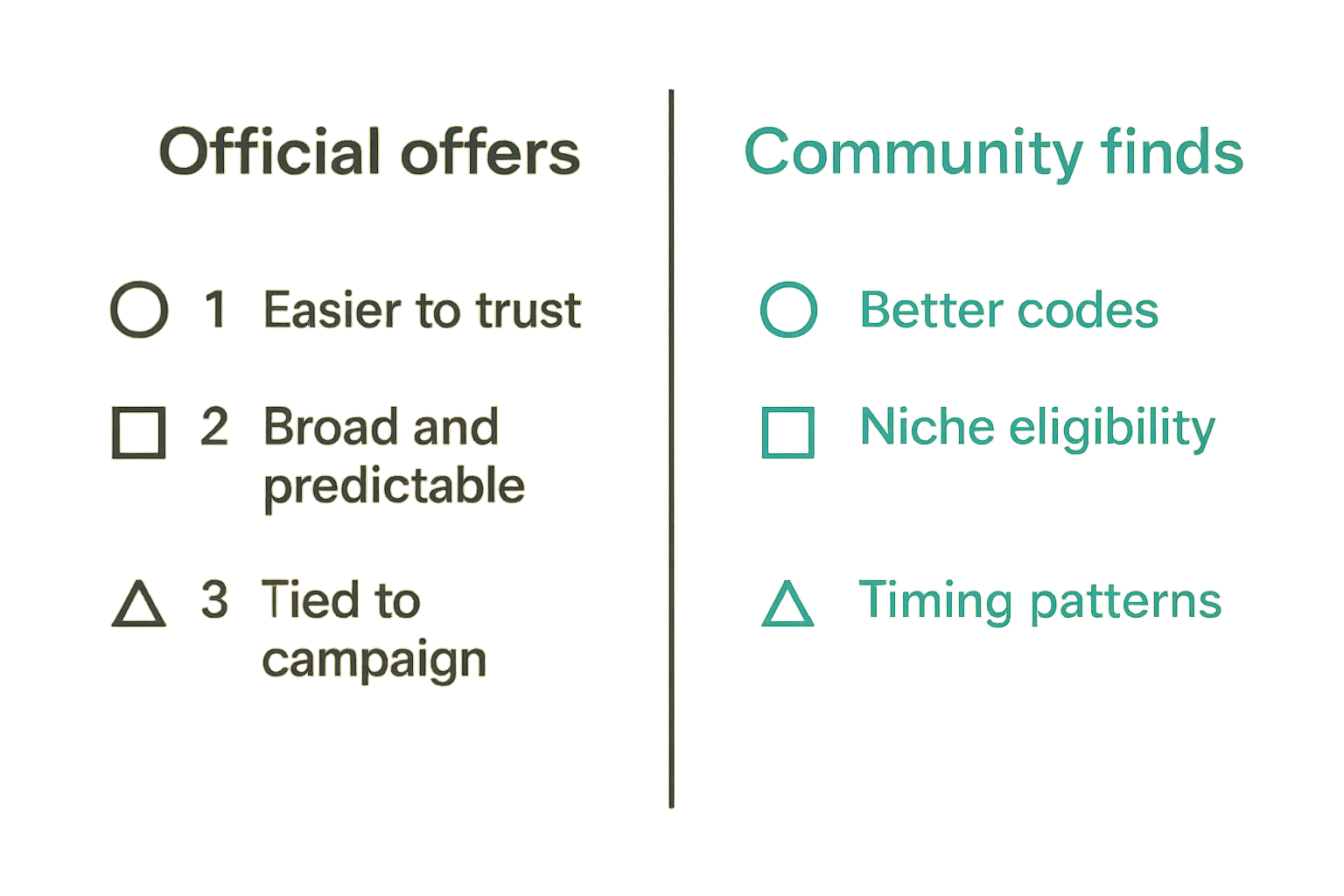
Official offers are usually easier to trust but not always the best available option. They may be broad, predictable, and tied to the current campaign. Community finds can surface better codes, niche eligibility, or timing patterns that are not obvious from the homepage.
The tradeoff is freshness. Community coupon codes decay quickly. A code that worked for one shopper may fail for another because of region, account age, app-only rules, product category, cart minimum, or one-use limitations.
A practical coupon stack usually starts with official sources and then checks community signals. On c0upons, the broader community coupon blog is useful when you want practical shopping workflows rather than just a list of codes.
Why expiration dates are only part of the story
Expiration dates help, but they are not the whole system. A code can be unexpired and still fail because your cart is ineligible. Another code can appear expired on a coupon site but still work for some accounts during a grace period or app promotion.
This is why timestamped community feedback matters. Not because it guarantees success, but because it gives you a signal. If several shoppers recently report success on similar orders, the code is worth testing. If the last success report is old, treat it as low priority.
Practical rule: freshness beats volume. Ten stale SHEIN coupons are less useful than one recently verified code that matches your cart type.
Build a SHEIN coupons workflow before you shop
A good SHEIN coupons workflow does not start with opening twenty browser tabs. It starts with deciding what you actually want to buy and what would make the order worth placing today.
That sounds basic, but it prevents the biggest failure mode in discount shopping: changing the basket to justify the deal. A coupon should improve the purchase you intended to make. It should not create a new purchase plan unless the math is still defensible.
Start with the cart, not the coupon box
Before testing promo codes, build a clean cart:
- Add only items you would buy without a coupon.
- Remove duplicates, impulse fillers, and uncertain sizes.
- Note the pre-coupon subtotal.
- Check shipping cost and threshold rules.
- Save or screenshot the baseline total.
This gives you a baseline. Without it, you cannot tell whether the coupon helped or whether the cart simply changed.
For apparel orders, also consider return friction. A cheap item that does not fit is not a saving. If you are unsure between sizes, check the return rules and whether the discount changes refund behavior before placing the order.
Use a simple verification sequence
Use the same sequence every time:
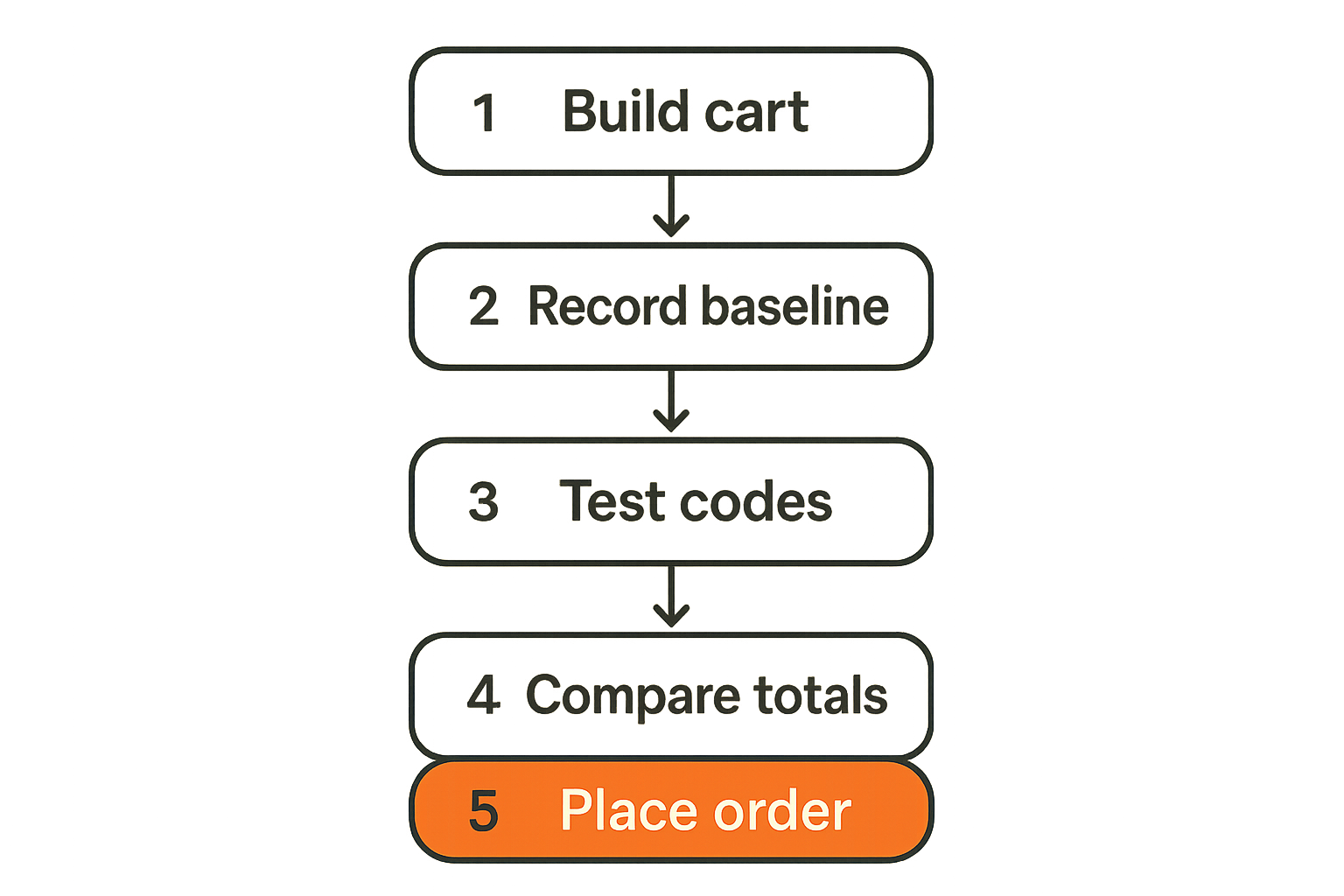
- Build the intended cart and record the baseline checkout total.
- Apply any automatic SHEIN sale or account offer already available.
- Test one official promo code and record the new total.
- Test one or two recent community-validated SHEIN coupons.
- Compare the final paid total, not the advertised percentage.
- Remove filler items and retest if a threshold was involved.
- Place the order only if the savings survive the clean-cart comparison.
This sequence keeps the process short. It also prevents the common mistake of testing codes against different carts and calling the lowest number the winner.
Practical rule: only compare coupon results against the same cart. If the cart changes, the test resets.
Understand stacking rules before chasing bigger discounts
Stacking is where many SHEIN coupon decisions get messy. Shoppers see sale prices, points, free shipping, app discounts, and promo codes at the same time, then assume everything will combine cleanly.
Sometimes it does. Often it does not. The checkout system decides which discounts are compatible, which line items qualify, and which order the discounts apply in. Your job is not to guess the full rules. Your job is to test them in a controlled way.
Percent-off, dollar-off, and threshold logic
SHEIN coupons usually fall into practical categories:
- Percent-off codes, such as a percentage off eligible items.
- Dollar-off codes, such as a fixed amount off after a minimum spend.
- Threshold offers, such as save more after crossing a subtotal level.
- Shipping offers, such as reduced or free shipping.
- Account or app-only rewards, such as points or wallet credits.
Percent-off codes usually look stronger on large carts. Dollar-off codes can win on smaller carts if the threshold is low. Shipping offers can beat both when shipping is a large part of the total.
The mistake teams make is comparing discount types without normalizing the cart. For shoppers, that means looking at 20% off versus $10 off without asking which produces the lower final paid total.
When stacking fails in practice
Stacking fails in predictable ways:
- The promo code replaces an automatic discount instead of adding to it.
- The code applies only to full-price items, not sale items.
- Points apply after a coupon, reducing their visible impact.
- Free shipping disappears when the subtotal drops below a threshold.
- A code is app-only, region-specific, or account-specific.
- Gift card or wallet rules interact differently from normal payment.
When this happens, do not keep guessing. Remove one variable at a time. Test the code without points. Test the cart without a filler item. Test shipping after the discount. The objective is not to reverse-engineer SHEIN's entire promotion engine. It is to identify the lowest reliable total.
Related reading from our network: privacy-minded deal sharing has similar trust boundaries to secure communication, and end to end encryption messaging architecture is a useful adjacent read on why systems need clear rules around identity, metadata, and verification.
Compare sale prices, coupon codes, points, and shipping
The best SHEIN coupons are often not the only saving lever in the order. The cart total is shaped by sale pricing, code eligibility, points, shipping, taxes, and return risk.
A useful way to think about it is as a comparison problem, not a treasure hunt. You are comparing scenarios. Each scenario must use the same intended cart or clearly mark what changed.
The real comparison table
Use a small table before placing any meaningful order:
| Scenario | Cart contents | Discount applied | Shipping impact | Practical read |
|---|---|---|---|---|
| Baseline | Intended items only | None or automatic sale | Normal | Your control number |
| Official code | Same cart | Official SHEIN promo | May change threshold | Usually reliable, not always best |
| Community code | Same cart | Recent shared code | Test carefully | Worth trying if recently reported |
| Threshold cart | Intended items plus filler | Bigger code unlocked | May improve or worsen | Only valid if filler is useful |
| Shipping-first | Smaller cart | Free or reduced shipping | Main saving lever | Often best for low subtotal orders |
This table does not need to be fancy. A note in your phone is enough. What matters is that you stop comparing vague discounts and start comparing outcomes.
How to avoid threshold spending traps
Threshold traps happen when a coupon requires a higher subtotal than your intended cart. You add items to qualify, the discount applies, and the checkout looks successful. But the final order may be more expensive than the clean cart.
Here is the practical test:
- If the filler item is something you already needed, count it normally.
- If the filler item exists only to unlock the code, compare the final total against the clean cart.
- If the filler item might be returned, include return friction and refund uncertainty.
- If the threshold causes you to delay a needed order, consider whether waiting is worth it.
Practical rule: a threshold coupon only saves money if the added items would have been worth buying without the coupon.
Common SHEIN coupon failure modes
Bad coupon workflows fail in boring ways. That is why they are easy to fix once you know what to look for.
The problem is rarely one dramatic checkout error. It is usually a chain of small misses: a code applies to fewer items than expected, shipping changes after the subtotal drops, points are used inefficiently, and the shopper does not compare against the original cart.
Code accepts but savings are weak
This is the most deceptive failure mode. The promo code is accepted, so it feels like success. But the actual savings may be tiny because the code excludes sale items, caps the discount, or replaces another better offer.
What works:
- Check the line-item discount if the checkout shows it.
- Compare the paid total before and after the code.
- Test one alternative code before accepting the result.
- Remove the code if it blocks a better automatic offer.
What fails:
- Assuming accepted means best.
- Trusting the banner percentage without checking eligible items.
- Adding more products to make a weak code look meaningful.
Cart changes invalidate the offer
Many coupon failures happen after the shopper changes the cart. You add a size, remove a color, swap a sale item, or change shipping. Suddenly the code no longer applies or the threshold is missed.
When this happens, reset the test. Do not patch the cart blindly. Rebuild the intended cart, confirm the subtotal, and apply the best code again. If the code still fails, the new cart likely changed eligibility.
Also watch for mobile-app behavior. Some offers may behave differently in the app versus desktop checkout. If the savings gap is meaningful, test both. If the gap is small, do not over-optimize.
Related reading from our network: the hiring workflow described in software engineer jobs in 2026 is a different niche, but the same operator lesson applies: unclear criteria create noisy decisions, whether you are screening candidates or discount codes.
What works for budget shoppers in 2026
Budget shoppers do not need the most complicated coupon stack. They need a repeatable system that finds good enough savings without turning every order into a research project.
What works in 2026 is disciplined comparison. Use current SHEIN coupons, but keep the cart anchored to actual need. Test a few high-signal codes. Avoid low-quality code lists with no freshness signals. Share results when a code works or fails so the next shopper wastes less time.
Create a repeatable deal checklist
Use this checklist for every SHEIN order:
- Is the cart made of items you already planned to buy?
- Is the baseline total recorded before codes?
- Did you test the official offer first?
- Did you test at least one recent community code?
- Did you compare final totals, not percentages?
- Did shipping change after the discount?
- Did points or wallet credits apply as expected?
- Would you still want the cart if the coupon disappeared?
If the answer to the last question is no, the coupon is driving the purchase. That is not always wrong, but it is a warning sign.
Use community signals without outsourcing judgment
Community coupon sites are useful because they compress trial and error. If other shoppers report that a SHEIN promo code worked recently, you get a starting point. But community validation is not a substitute for checkout validation.
The strongest community signals are specific: worked today, app only, minimum spend, sale items excluded, new accounts only, or free shipping still applied. The weakest signals are vague: huge savings, best code, limited time, no context.
If you find a code that works, consider sharing the exact context on the coupon submission page. A useful report is not just the code. It is what kind of cart it worked on and what limits you noticed.
Measure real savings after checkout
Most shoppers stop measuring once the order is placed. That is understandable, but it hides whether the coupon actually improved the purchase.
Real savings include what happened after checkout: whether the items fit, whether you returned anything, whether shipping delays forced a replacement purchase, and whether the discount affected refund value. You do not need a spreadsheet for every small order, but you should understand the pattern.
Track paid total, not claimed discount
Claimed discount is the number the site wants you to notice. Paid total is the number your budget feels.
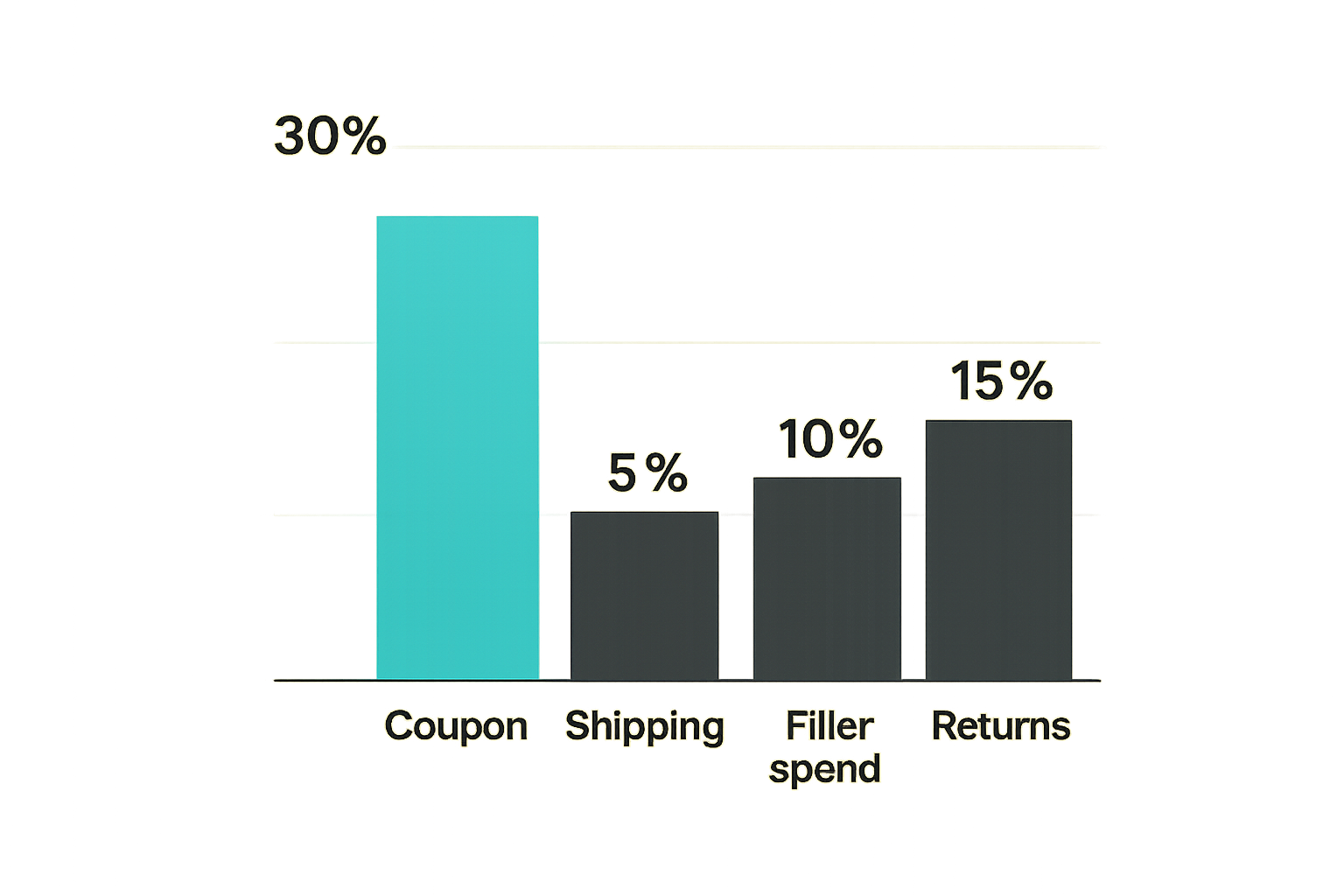
For any larger SHEIN order, track four numbers:
- Baseline total before manual coupons.
- Final total after the chosen coupon.
- Extra spend added to unlock the coupon.
- Refunds, returns, or replacement purchases after delivery.
This turns couponing into feedback. If threshold codes repeatedly cause you to buy extra items you do not keep, your real savings are lower than the checkout suggested. If free shipping consistently beats percent-off codes on small orders, that becomes your default strategy.
Include returns, delays, and replacement buys
Fashion deals have a hidden cost: uncertainty. Size, fabric, color, delivery timing, and return rules can change the real value of a discount.
A cheap order is not cheap if half of it sits unworn. A coupon does not help if it encourages you to buy low-confidence items. The practical move is to use SHEIN coupons on items with enough certainty: known sizes, repeat basics, planned seasonal pieces, or items where reviews reduce guesswork.
This is where budget discipline matters. Coupons are useful when they reduce the cost of a planned purchase. They are risky when they reduce the friction of an uncertain purchase.
How c0upons.com fits the SHEIN coupons workflow
c0upons.com is built for shoppers who want practical ways to save with coupon codes, promo codes, sales, and deal roundups. In a SHEIN coupons workflow, that means using community information as a filter before checkout, then using your own cart math as the final decision.
The goal is not to promise that every code will work for every shopper. That would be hype. The goal is to make coupon discovery less random and to make working codes easier to find, test, and share.
Community validation is a filter, not a guarantee
Community coupon data is valuable because it reduces the search space. Instead of testing every code on the internet, you start with codes that other shoppers have surfaced or discussed.
But the checkout still decides. SHEIN may apply eligibility rules based on account, region, product, category, device, timing, or promotion overlap. A code can be valid and still not fit your cart.
That is why the best use of c0upons.com is not blind copying. It is workflow support: find likely codes, test them against your baseline cart, compare final totals, and keep the best result.
Sharing working codes improves the next shopper's checkout
Coupon communities work when shoppers report outcomes, not just codes. A good report says what worked, when it worked, and what conditions mattered.
Helpful examples:
- Worked on app checkout for a cart over a specific threshold.
- Did not stack with sale items.
- Free shipping remained after applying the code.
- Failed on desktop but worked in mobile checkout.
- Better than the official banner for a small cart.
That kind of detail turns a random SHEIN coupon into a useful signal. It also helps budget-conscious shoppers avoid repeating the same failed tests.
Final checklist for SHEIN coupons
SHEIN coupons are useful when they fit into a disciplined checkout workflow. They are expensive when they make you buy more than you planned, ignore shipping changes, or mistake an accepted code for the best total.
The practical question is simple: did the coupon lower the final cost of the cart you actually wanted? If yes, use it. If no, skip it and wait for a better sale, a better code, or a cleaner cart.
What to do before you click place order
Run this final pass:
- Confirm the cart contains only items you want.
- Check the baseline total and final total.
- Verify that the chosen SHEIN coupon applies to meaningful items.
- Confirm shipping did not erase the savings.
- Check whether points or wallet credits were used wisely.
- Remove filler items and retest if needed.
- Save the code details for future comparison.
If the math still works after that pass, the order is much cleaner.
What to skip when the math does not work
Skip the coupon if it requires filler items you do not need. Skip the code if it replaces a better automatic discount. Skip the order if you are only buying because the sale timer is loud.
That is the discipline that separates real savings from promotional noise. SHEIN coupons can absolutely help in 2026, but only when the checkout workflow protects your budget.
Try c0upons.com
c0upons.com helps online shoppers find practical ways to save money with coupon codes, promo codes, sales, and deal roundups. Start your next SHEIN coupons workflow with Try c0upons.com.