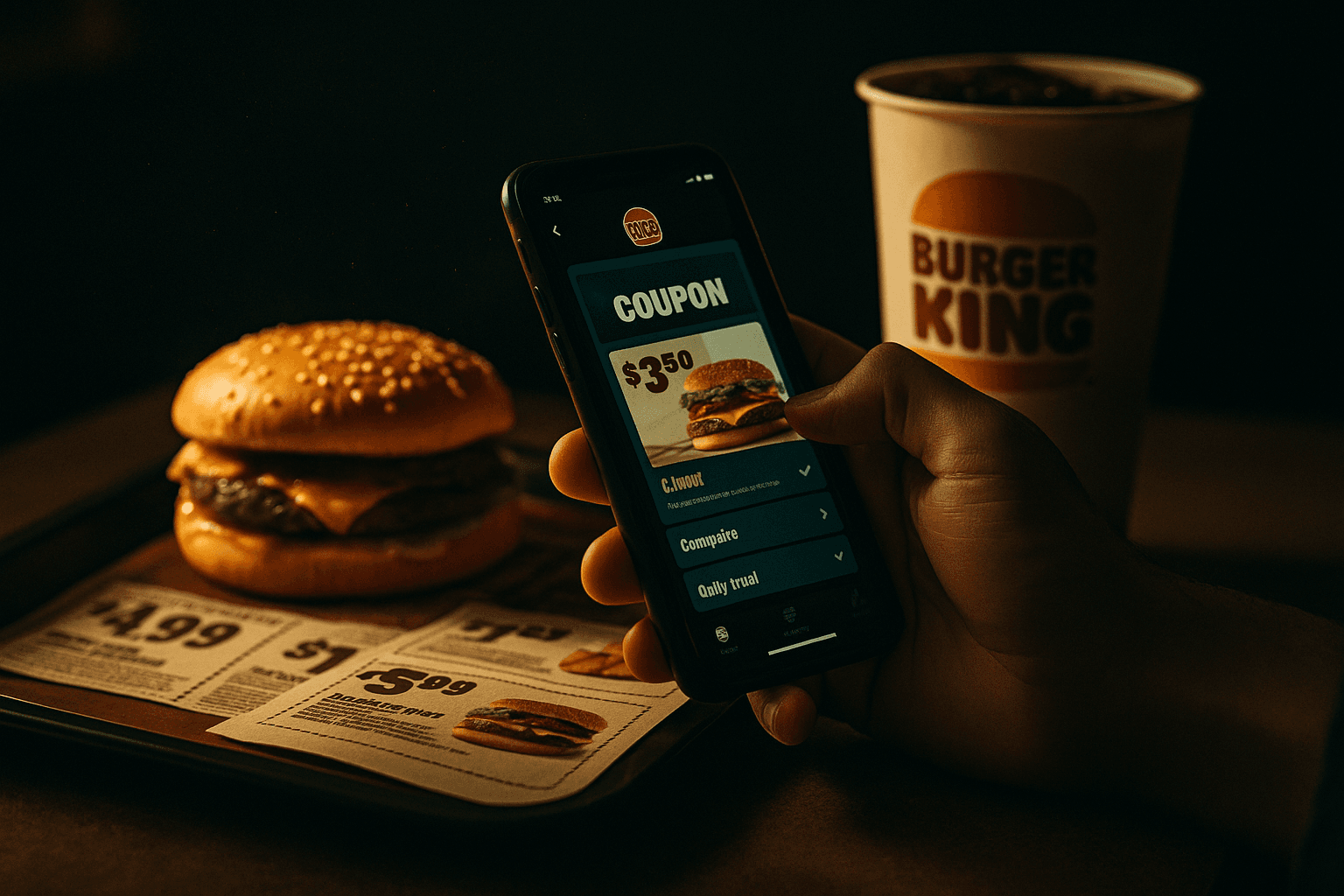
Burger King App Promo Codes: A Practical 2026 Workflow for Saving Without Wasting Checkout Time
Burger King app promo codes look simple until you are hungry, standing in line, and the code that worked for someone else refuses to apply to your cart.
Teams think the problem is finding a magic code. The real problem is running a clean checkout workflow: account eligibility, location rules, order type, minimum spend, rewards balance, taxes, delivery fees, and the final paid total.
That changes the conversation. The practical question is not whether a Burger King promo code exists somewhere online. It is whether that code beats the app offer you already have, works at your selected restaurant, and survives the last checkout screen.
This guide treats Burger King app promo codes as a savings system, not a scavenger hunt. The goal is to help online shoppers, deal hunters, and coupon community members save money without burning twenty minutes testing dead codes.
Table of contents
- Why Burger King app promo codes are a workflow, not a hunt
- Map the Burger King discount stack before you order
- Build a repeatable promo code workflow
- Where to find usable Burger King app promo codes in 2026
- What works: high-signal tactics for deal hunters
- What fails: common promo code mistakes
- Troubleshooting when a code will not apply
- Burger King app promo codes versus coupons, rewards, and delivery deals
- Turn savings into a simple household system
- How c0upons.com fits into the Burger King savings workflow
Why Burger King app promo codes are a workflow, not a hunt
Most shoppers treat Burger King app promo codes like lottery tickets. Copy a code, paste it, hope it works, repeat until patience runs out.
The mistake teams make is assuming the promo code is the system. It is not. The system is the path from offer discovery to a lower confirmed checkout total.
The code is only one discount signal
A Burger King discount can show up in several places:
- A public promo code shared on a coupon site.
- An app-only offer attached to your account.
- A rewards redemption using points.
- A location-specific deal from a participating restaurant.
- A delivery platform discount.
- A receipt survey or email offer.
These are not interchangeable. One may require pickup. Another may require delivery. Another may exclude combos, limited-time items, or taxes and fees. A useful way to think about it is that every offer has a scope: account, cart, store, order type, and time.
The app changes eligibility at checkout
What breaks in practice is that eligibility often gets resolved late. You may see a code online, build a cart, and only find out at checkout that it does not apply to your store or account.
That is frustrating, but it is normal for app-based food deals. The restaurant, menu availability, loyalty account, and order type can all affect the final result. The discount engine is not just checking a text string. It is evaluating the whole order.
Practical rule: Do not trust a Burger King app promo code until the discount appears in the final checkout total for your actual order.
The practical goal is the final paid total
Deal hunters often optimize for the biggest visible discount. Operators optimize for the net number. Shoppers should do the same.
A free item offer can be worse than a percentage discount if it pushes you into a larger cart. A delivery promo can be worse than pickup after fees. A rewards redemption can be better saved for a different order.
The practical question is simple: after taxes, service fees, delivery fees, and required add-ons, which path costs less?
Map the Burger King discount stack before you order
Before testing codes, know what can and cannot stack. This prevents the most common failure mode: trying five offers that were never eligible to combine.
App offers and promo code fields
The Burger King app may show offers inside the account or promotions area. Some offers are tap-to-apply. Some may require a code. Some are visible only to certain users or regions.
Public Burger King app promo codes are different. They are usually typed into a promo field, if available for the order path you are using. In practice, many shoppers find that app-native offers are more reliable than random public codes because the app already knows the account and store context.
Rewards points and account targeting
Loyalty rewards introduce a second layer. If you have points available, the app may let you redeem them for certain items. That can beat a coupon, especially for a small cart.
But rewards also create tradeoffs. Spending points on a low-value item today may not be the best move if you expect a larger order later. The mistake is treating points like free money without comparing the alternative uses.
Account targeting matters too. A code that works for a new user, lapsed user, or specific region may fail for an existing customer with a different purchase history.
Delivery fees taxes and location rules
The discount number is not the checkout number. Delivery fees, service charges, small order fees, and local taxes can erase a promo.
Location rules matter because not every restaurant participates in every offer. Menu availability also varies. If a code requires a specific sandwich or bundle and your selected store does not sell it at that time, the code may fail even though the offer is real.
Related reading from our network: workflow architecture matters before tool choice in project management for the same reason it matters in couponing: the visible interface is not the whole system.
Build a repeatable promo code workflow
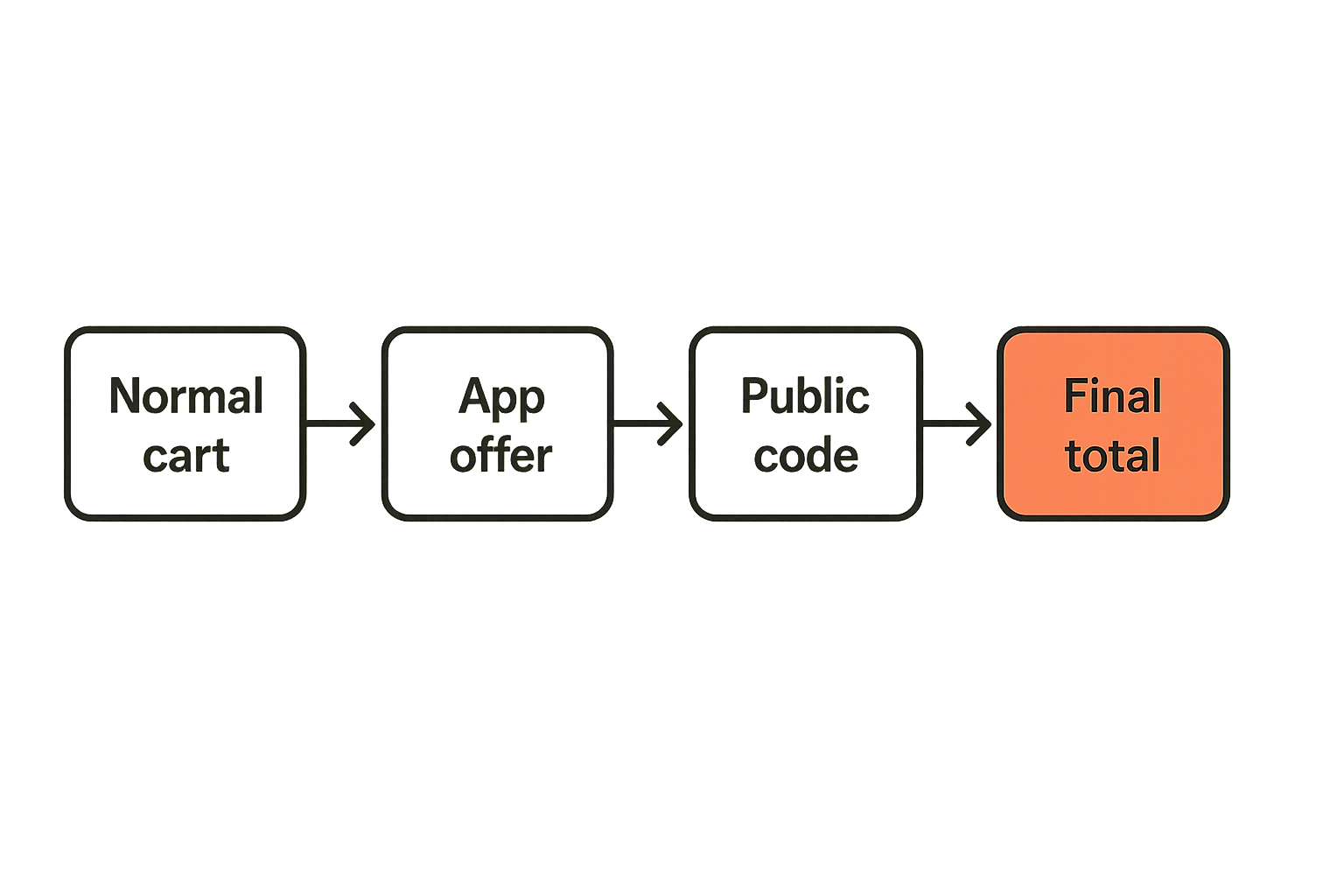
A repeatable workflow turns deal hunting from guesswork into a short checklist. You are trying to reduce checkout time, not create a second job.
Start with the order type
Decide the order type before touching codes:
- Pickup through the Burger King app.
- Delivery through the Burger King app.
- In-store purchase with an app offer.
- Delivery through a third-party marketplace.
This decision matters because the same discount can behave differently across order types. Pickup often has fewer fee surprises. Delivery can win only when the promo is large enough to overcome fees.
Test offers in the right sequence
Use this sequence when testing Burger King app promo codes:
- Build the normal cart first. Do not add filler items yet.
- Check app-native offers attached to your account.
- Apply the strongest relevant app offer and note the total.
- Remove that offer if the app allows it, then test a public promo code.
- Compare the final total, not the discount label.
- Test rewards redemptions if points are available.
- Add required minimum-spend items only if the new total is still lower.
- Stop when the next test is unlikely to save more than the time is worth.
This is boring on purpose. Boring workflows save money because they avoid emotional cart building.
Practical rule: Always test from your normal cart first. If a promo requires extra food you did not plan to buy, the discount has to beat the added spend.
Screenshot the winning cart
Take a screenshot of the winning cart before placing the order, especially if you are ordering for a group. This gives you a reference if the total changes, the store cancels an item, or someone asks why you chose one deal over another.
It also helps if you share the result with a coupon community. A verified screenshot is more useful than a vague comment like worked for me.
Where to find usable Burger King app promo codes in 2026
The best source is not always the loudest one. In 2026, coupon discovery is partly about filtering noise.
Check the app before public code lists
Start inside the Burger King app. App offers are usually the cleanest first test because they are already tied to your account context. You can see expiration windows, item requirements, and sometimes the exact redemption flow.
If the app has a strong offer, public codes may not matter. Many checkout systems allow only one promotion at a time, so a random code can replace a better app deal.
Use community coupon searches carefully
Community coupon sites are useful when they help you identify codes that other shoppers have recently tested. They are less useful when they show old codes without context.
When you use a coupon search, look for freshness, notes, and failure comments. A code that failed for delivery but worked for pickup is still useful information. You can search community-submitted offers on c0upons.com coupon search when you want another verification layer before checkout.
Do not blindly paste ten codes from ten tabs. That is how you lose track of which discount actually improved the total.
Watch email push and receipt offers
Some useful fast-food offers do not show up in public code lists immediately. Watch for:
- App push notifications.
- Email promotions.
- Receipt survey offers.
- Local store flyers.
- Limited-time campaign messages.
The catch is that these offers may be account-specific or one-time use. If you share them publicly, include that context.
Related reading from our network: product names and launch systems is not about coupons, but it makes a similar point: labels are easy; systems that survive real usage are harder.
What works: high-signal tactics for deal hunters
High-signal tactics are the moves that consistently reduce the final total or prevent wasted time.
Compare pickup delivery and in-store
Always compare at least two order paths when the cart is large enough to justify it. Pickup may beat delivery even with a delivery promo. In-store may beat app ordering if the app offer is weak but a local deal is available.
For a small order, the comparison may take longer than the savings. For a family order, it can matter.
A simple comparison looks like this:
- Pickup in app: lower fees, app offers available.
- Delivery in app: possible delivery promo, higher fees.
- Third-party delivery: marketplace coupons, possible menu markups.
- In-store: local coupons, less app friction.
Use meal construction to avoid exclusions
Promo failures often come from cart construction. You added the wrong size, swapped an excluded item, selected a limited-time product, or built a combo that the offer does not recognize.
When testing a code, start with the simplest eligible version of the meal. If the code works, then modify carefully. If it breaks after a customization, you found the issue.
This is especially important for family bundles, value meals, and limited-time items. A small customization can change how the app categorizes the product.
Track expiration and redemption limits
Some deals expire at midnight. Some expire by local time. Some disappear once redeemed. Some have weekly limits. If you find a working Burger King app promo code, note the date and the order type.
Practical rule: A promo code without an expiration note, order type, and tested cart context is only half a coupon.
What fails: common promo code mistakes
Bad coupon workflows do not just fail to save money. They create annoyance, bigger carts, and false confidence.
Stacking offers that cannot stack
The most common mistake is trying to stack an app offer, a promo code, and a rewards redemption when the checkout flow allows only one promotional discount.
Some rewards may combine with some offers, but you should not assume it. Test one change at a time. If you apply three things at once and the total changes, you will not know which one caused it.
Chasing expired social codes
Short-form social posts are good at spreading codes and bad at preserving context. A code may have worked yesterday for a new account in one city. That does not make it useful today for your pickup order.
Look for comments with recent timestamps and actual checkout details. If nobody can say what cart, store type, or order type worked, treat the code as low confidence.
Ignoring minimum spend math
Minimum spend offers are dangerous because they feel like savings while nudging you to buy more.
Example: your cart is $9.50. A code gives $3 off $15. You add $5.50 of food to qualify. Your new pre-tax total after discount is $12. That is more than the original cart. If you wanted the extra item anyway, fine. If not, the coupon increased your spend.
The same pattern shows up with delivery thresholds. Free delivery can be useful, but not if you add unwanted items to cross the line.
Troubleshooting when a code will not apply
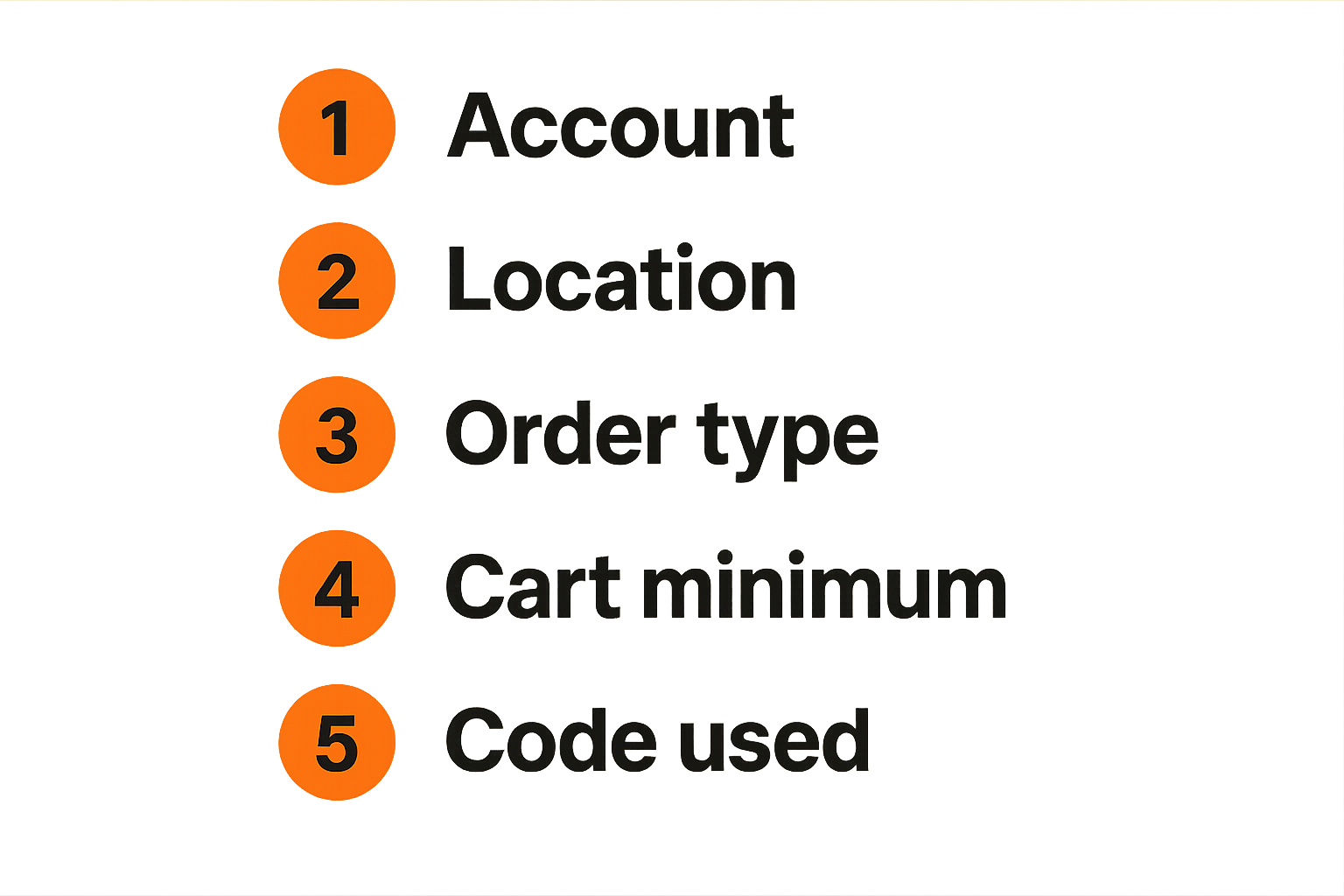
When a code fails, do not keep hammering the same checkout screen. Diagnose it like a simple state problem.
Confirm account and location eligibility
Check the basics first:
- Are you signed into the right account?
- Is the selected Burger King location participating?
- Is the order pickup, delivery, or in-store as required?
- Is the cart above the minimum spend before taxes and fees?
- Are the required items present?
- Has the code already been used?
If any answer is uncertain, fix that before testing again.
Rebuild the cart from scratch
Apps can hold stale cart state. If a code should work but does not, empty the cart, close the app, reopen it, and rebuild the simplest eligible order.
Then apply the code before heavy customization. If it works, add changes one at a time. If it fails again, the issue is probably eligibility, not a typo.
This is the same operational pattern used in more serious systems: isolate variables before blaming the tool. Related reading from our network: connecting signals to response workflows covers that idea in a security context, where noisy signals also need disciplined triage.
Know when to stop testing
There is a point where testing costs more attention than the coupon is worth. Set a cutoff.
For example:
- Small solo order: test one app offer and one code.
- Medium order: compare pickup and delivery totals.
- Group order: test app offer, public code, rewards, and delivery marketplace.
If nothing works after that, order the cheapest acceptable option or skip the purchase.
Practical rule: The best coupon workflow has a stop condition. Saving $1 is not worth a 20-minute checkout spiral.
Burger King app promo codes versus coupons, rewards, and delivery deals
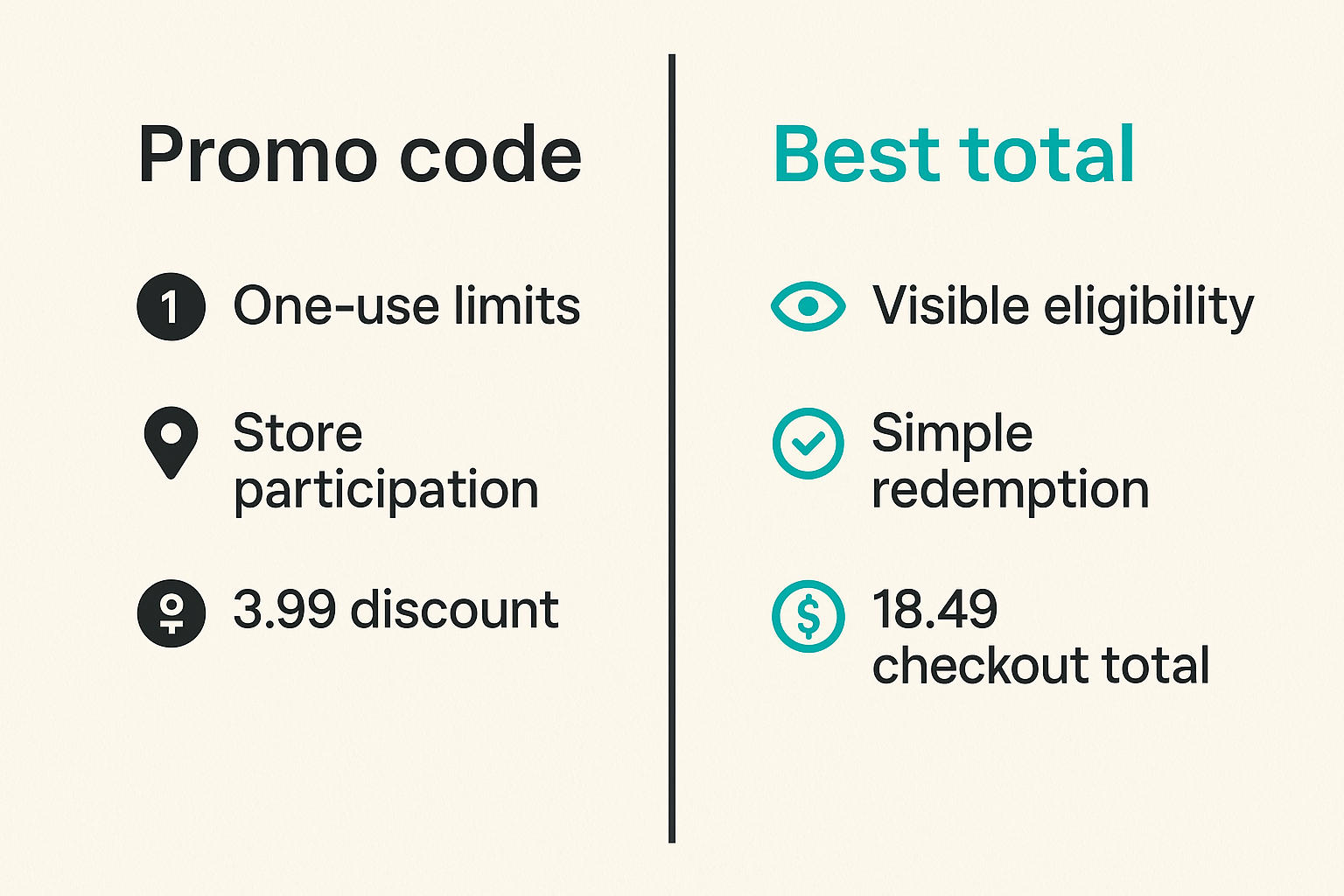
Burger King app promo codes are one tool. They are not always the best tool.
Comparison table for common discount types
| Discount type | Best for | Watch out for | How to verify |
|---|---|---|---|
| App promo code | Specific campaigns, account offers, pickup or delivery orders | Account targeting, one-use limits, store participation | Apply in app and check final total |
| App offer tile | Fast testing, visible eligibility, simple redemption | May block other offers, may require exact items | Tap offer, build cart from the offer flow |
| Rewards points | Small carts, free items, loyal customers | Poor value redemptions, item exclusions | Compare points use against cash discount |
| Receipt coupon | Return visits, local store offers | Survey requirements, in-store only rules | Read receipt terms before ordering |
| Third-party delivery promo | Large delivery orders, marketplace credits | Fees, menu markups, driver tips, restrictions | Compare full delivered total |
| Public coupon code | Extra verification, new campaigns, community finds | Expiration, low context, repeated failures | Test after app offers and record result |
When an app offer beats a promo code
An app offer usually wins when it is visible in your account, attached to a common item, and applies without extra cart manipulation. It is faster and more reliable.
If the app shows a free fries offer and your cart already includes an eligible meal, that may beat a public code requiring a larger minimum spend. The lower-friction deal is often the better deal.
When a third-party delivery deal wins
Third-party delivery can win when you have a strong marketplace coupon, credit, or subscription benefit. But you have to compare the delivered total, not the promo label.
Menu prices can differ. Fees can stack. Tips still matter. If you order delivery often, use the same careful workflow you would use for restaurant apps. The same logic applies to other food-delivery discounts, and this DoorDash promo codes workflow is a useful adjacent example.
Turn savings into a simple household system
A household coupon system should be lightweight. If it becomes a spreadsheet project, most people will stop using it.
Keep a deal note without overcomplicating it
Create one note on your phone with a simple format:
- Date tested.
- Store or app.
- Code or offer name.
- Order type.
- Cart requirement.
- Final result.
Example:
- 2026-07-14
- Burger King app
- Free item offer in account
- Pickup
- Required eligible combo
- Worked at checkout, better than public code
This gives you a memory without creating admin work.
Share verified results with the community
Coupon communities get better when people share context. If you find a working code, include the order type, date, and any restrictions you noticed.
If you find a dead code, that is useful too. A clean failure report saves other shoppers time. You can submit a verified coupon or promo note so other deal hunters have fresher information than a stale comment thread.
Set a budget rule before opening the app
Fast-food apps are built to make ordering easy. That is convenient, but it also makes upsells easy. Set a budget rule before opening the app.
Good budget rules are simple:
- Solo lunch stays under a set dollar amount.
- Delivery only happens when the delivered total is under a threshold.
- Minimum spend coupons do not count if they require unwanted items.
- Rewards points are saved for higher-value redemptions.
The point is not to be strict for its own sake. The point is to keep the coupon from becoming the reason you spend more.
How c0upons.com fits into the Burger King savings workflow
c0upons.com is built for shoppers who want practical ways to save with coupon codes, promo codes, sales, and deal roundups. For Burger King app promo codes, the useful role is verification and community context.
Use search as a verification layer
The app should usually be your first stop. A coupon community should be your second layer: check whether other shoppers have recently seen the same code, whether it worked for pickup or delivery, and whether there are better adjacent offers.
This keeps the workflow grounded. You are not outsourcing judgment to a random code list. You are adding signal before checkout.
Browse related store deals when the app is dry
Sometimes the Burger King app will not have a worthwhile offer. That does not mean your savings workflow failed. It means the best decision may be another restaurant, another store, or waiting for a better promo window.
You can browse broader store and deal pages on c0upons.com store coupons when you want to compare alternatives instead of forcing a weak Burger King deal to work.
Try c0upons.com
c0upons.com helps online shoppers find practical ways to save money with coupon codes, promo codes, sales, and deal roundups. Use it as a verification layer when testing Burger King app promo codes, then trust the final checkout total.